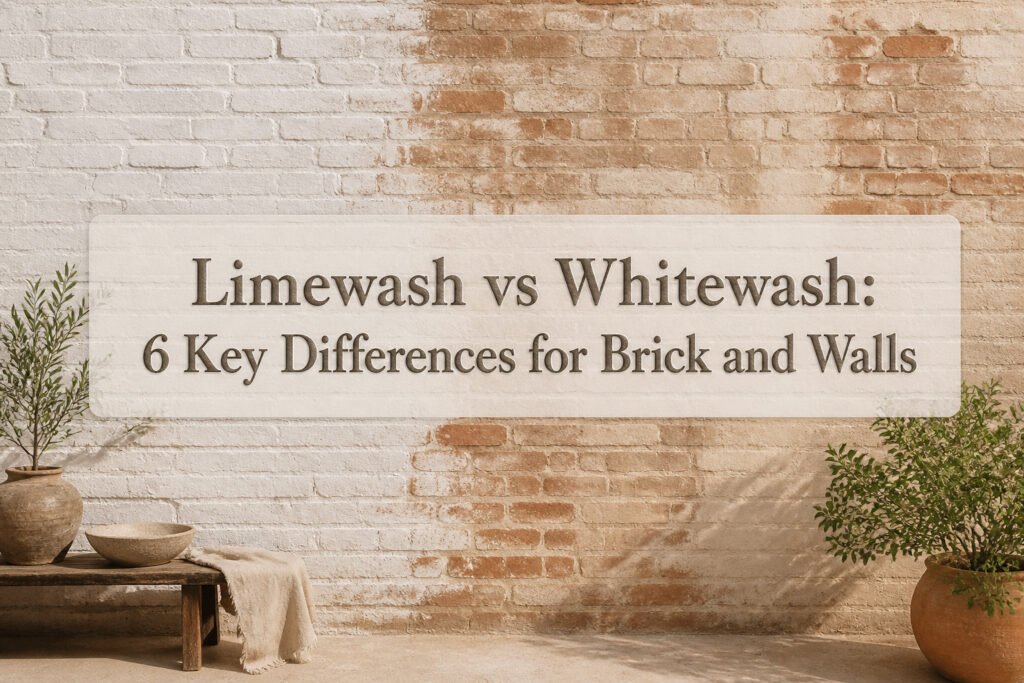
Limewash wins for old brick and any wall that breathes, but only if you have the patience for three coats and a finish that needs renewal every 5 to 7 years. Whitewash takes the afternoon if speed matters more than longevity, and it stretches to 20 or 30 years on newer veneer. The trap is moisture: latex whitewash seals vapor in, while limewash, made from calcium hydroxide that carbonates back into limestone, lets walls exhale. That chemical reaction is also why the color keeps shifting for days after the brush dries.
Composition and What Each Mix Actually Is
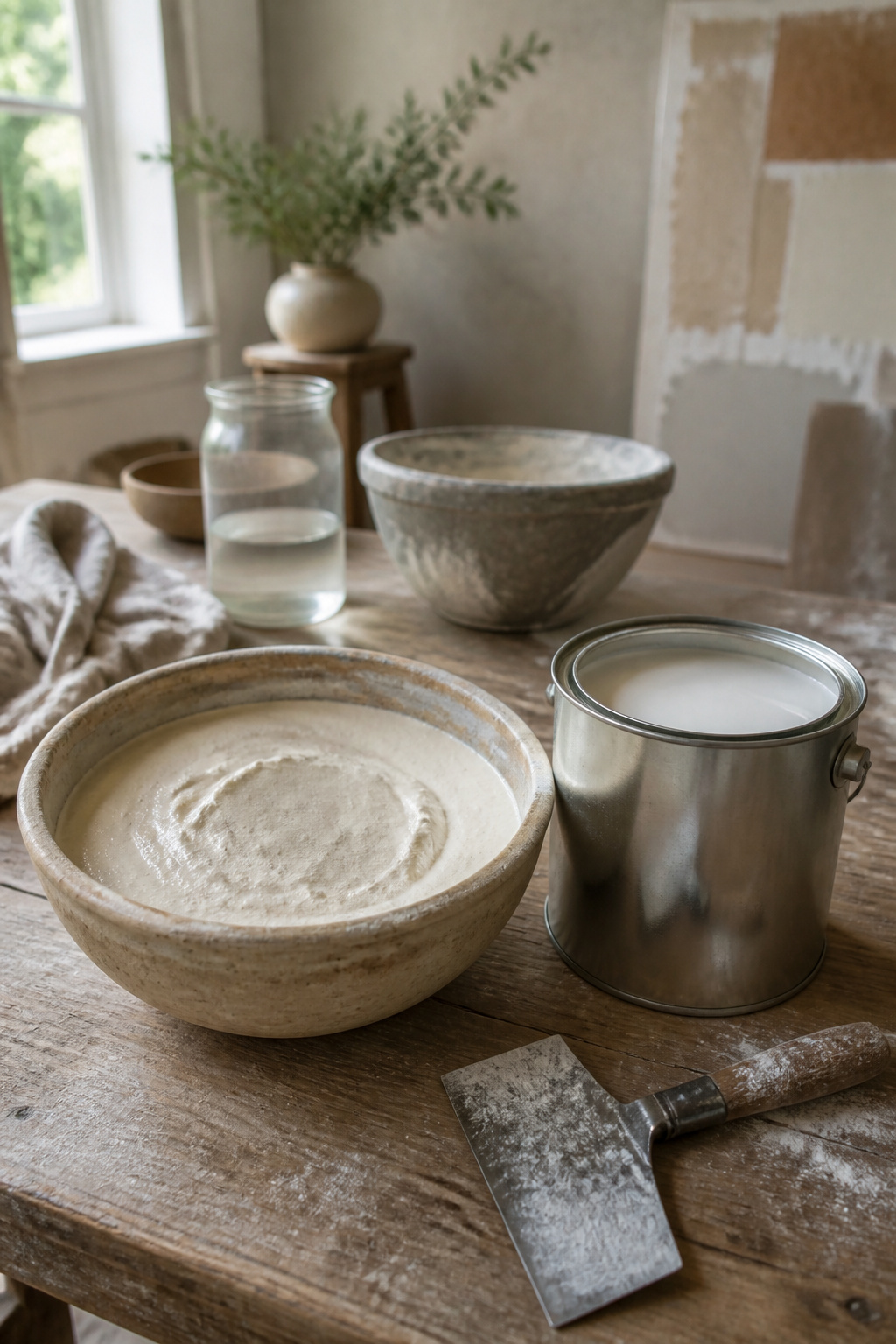
Limewash starts with slaked lime, water, and natural pigments. That slaked lime, calcium hydroxide, is what lets the finish carbonate: it pulls carbon dioxide from the air and hardens into calcium carbonate, essentially becoming limestone again. The wall and the coating fuse together, which is why limewash strengthens the surface rather than just sitting on top.
Whitewash is a looser category. Traditional mixes use lime, water, and white chalk or similar additives, but the version most people buy now is diluted latex or acrylic paint thinned with water. No chemical reaction happens. The paint dries into a thin veil of color that coats the brick or plaster without bonding into it.
That natural-versus-synthetic split changes how each one behaves on your trowel or brush. Limewash demands two to three coats and some patience; the carbonation takes time, and the finish keeps developing for days. Whitewash goes on faster and simpler, which is part of its appeal for a quick afternoon project, though the tradeoff shows up in how it wears. The latex or acrylic binder can trap moisture behind it, while limewash stays breathable, letting walls exhale. If you’re working with old brick or anything that sees humidity swings, that distinction matters more than the label on the bucket.
How the Finished Wall Looks Different
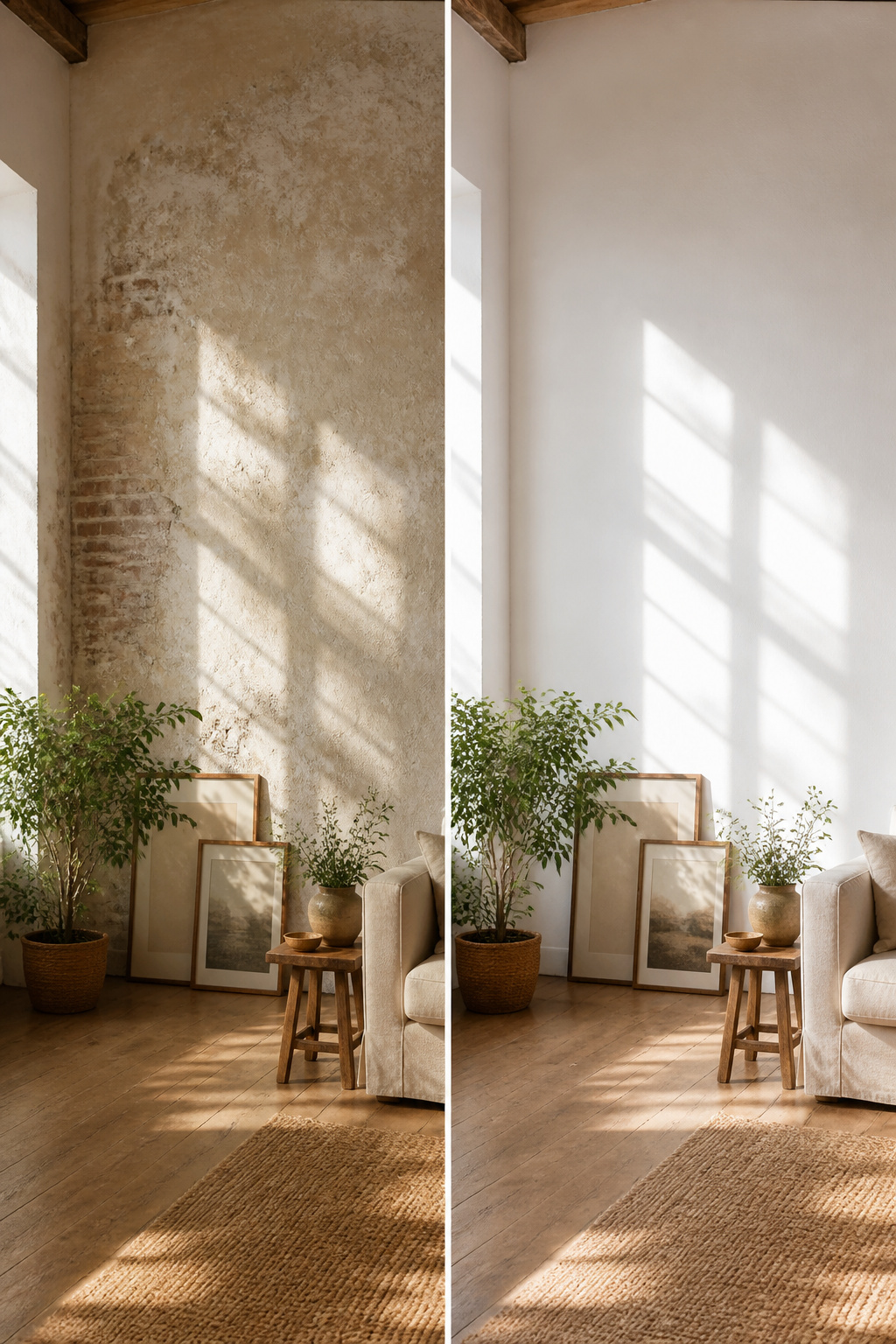
Light moves across a limewashed wall like it is finding layers that were not there a moment ago. The finish is soft, textured, and mottled, with tonal variations that shift from morning to afternoon because the material sits unevenly, letting some brick show through in places and veiling it in others. No two square feet match exactly, which is the point: the wall looks lived-in rather than decorated.
Whitewash reads calmer and more uniform. The diluted paint layer goes on thin but covers evenly, giving a flat, bright, chalky white that stays consistent across the whole surface. Where limewash catches sunlight in ridges and hollows, whitewash reflects it back evenly, almost like a skim coat of plaster.
Paint can imitate the limewash color, but it cannot fake the way light plays across that mineral surface. Acrylic binders level out and seal the wall, so the shadow stays flat. The cloudy movement and velvety matte of real limewash come from the lime crystallizing into the brick itself, leaving micro-variations that shift as you walk past. That living quality is what homeowners are after when they choose it over the simpler, cleaner read of whitewash.
Durability and How Often You Paint Again
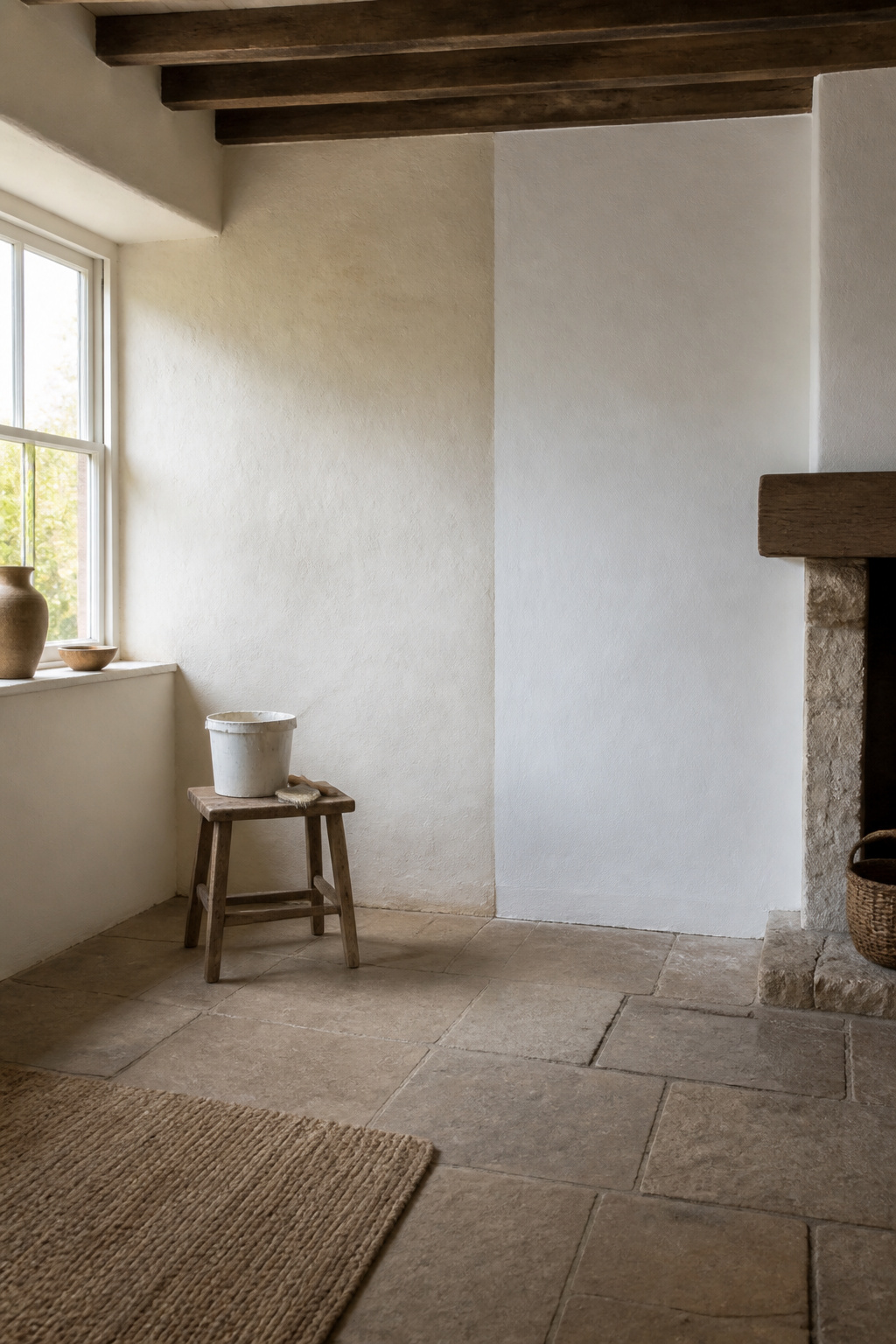
Limewash hangs on for about 5 to 7 years before the finish asks for a refresh coat. Modern paint-based whitewash, the kind thinned from latex or acrylic, stretches that to 20 or 30 years. The gap sounds like a knockout win for whitewash until you remember what brick actually needs.
A south-facing wall in a wet climate chews through either finish faster than the numbers suggest. Freeze-thaw cycles open hairline cracks that let water behind the surface, and direct sun bakes color out of anything porous. Older solid brick soaks limewash in deep, which helps the bond but also means the weather hits the coating from inside and out. Newer brick veneer faces less of that internal stress, so the same whitewash layer lasts closer to the long end of the range.
The shorter life of limewash is not purely a drawback. The finish stays water-permeable, so moisture escapes instead of trapping behind it. When the time comes, another thin coat revives the whole surface without stripping or sanding. Whitewash out of a paint can seals tighter, which locks water in if the wall behind it breathes, and fixing failure means scraping back to bare brick. For some houses the 20-year span is freedom; for others it is 20 years of slowly trapping trouble.
Breathability and Moisture
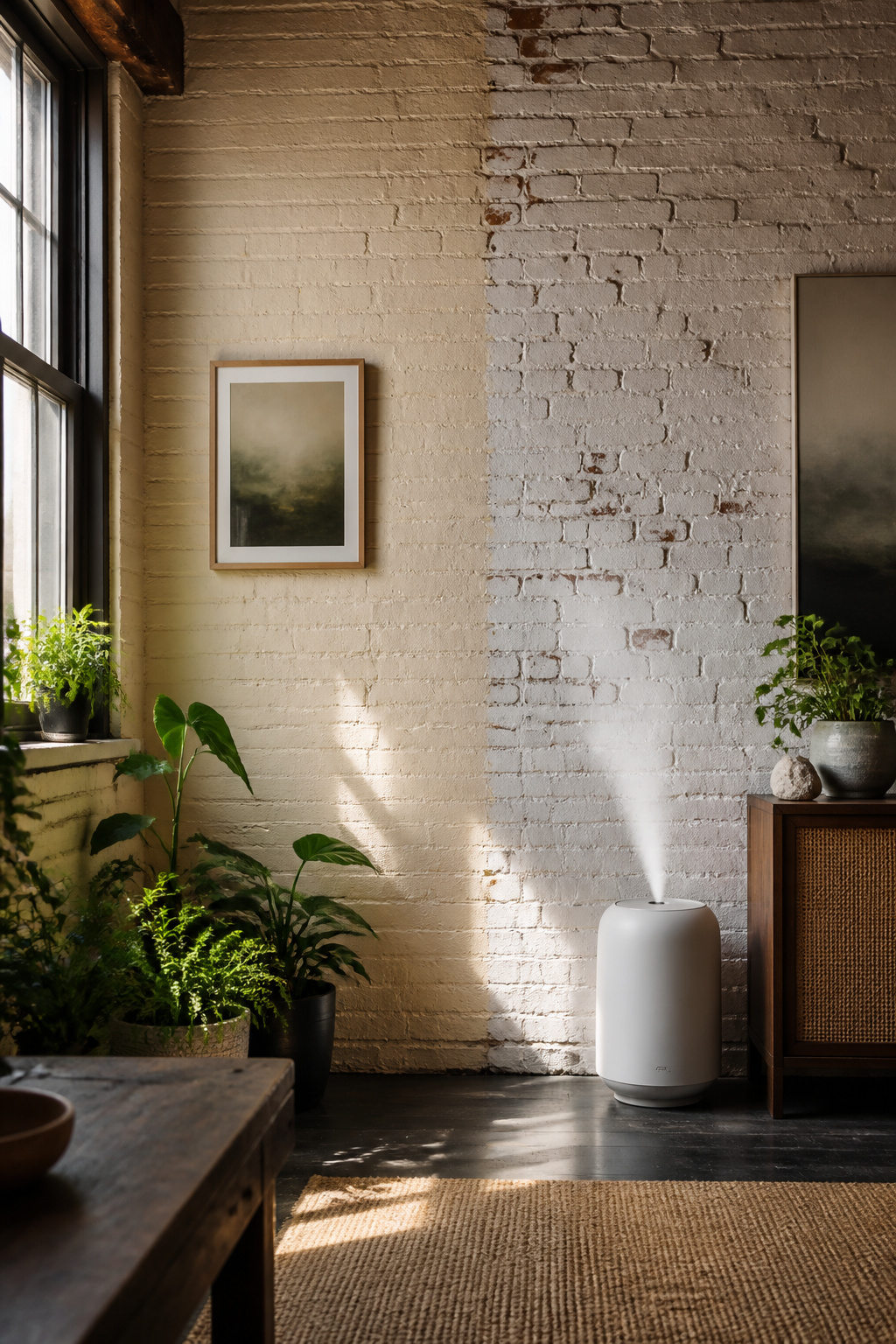
Limewash lets walls breathe in a way whitewash simply does not. Moisture trapped behind a finish has nowhere to go with whitewash, and over seasons that vapor turns to condensation against brick or plaster. Mold and mildew follow. Limewash, made from limestone and water, cures into a porous surface: water vapor passes straight through to the outside air.
This matters most on old masonry, anywhere humidity runs high, and on any wall without a modern vapor barrier. Historic buildings benefit because their walls were designed to breathe; sealing them up invites the kind of damage that shows up first as a musty smell, later as spores. I have read enough restoration accounts to know that swapping limewash for latex paint on century-old brick is a common mistake, and an expensive one to undo.
Whitewash still has its places. A well-ventilated barn or fence dries fast enough that breathability rarely becomes the problem. But for interior brick in a bathroom, a basement, or any room where steam lingers, the difference is not subtle. One finish works with the wall; the other works against it.
Which Surfaces Each One Likes
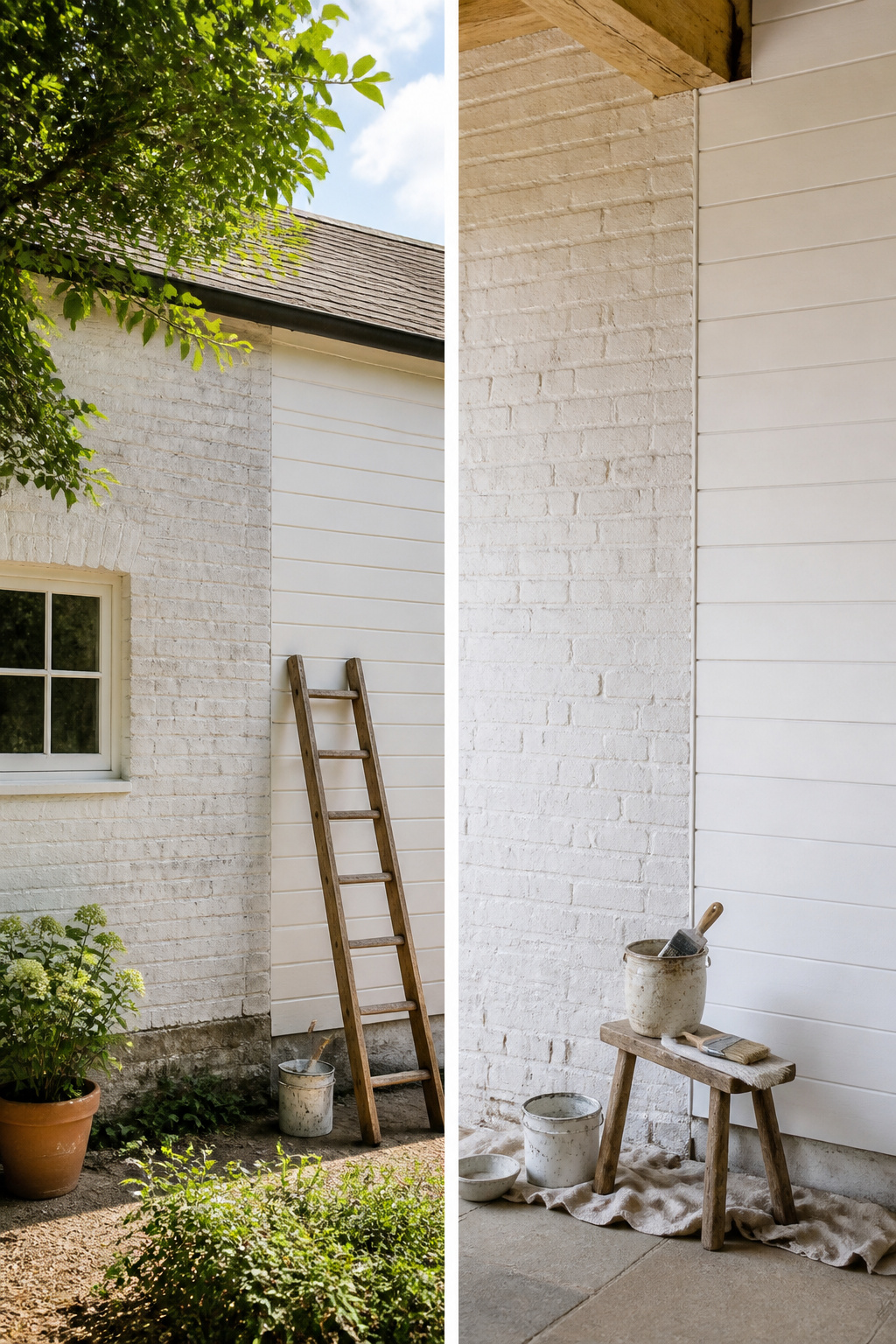
Limewash and whitewash both need a porous surface to grab onto, but the match isn’t interchangeable. Brick, stone, plaster, and stucco drink limewash in, letting it form that chalky, weathered bond people want on old masonry or a fireplace surround. The lime chemically reacts with the surface, so sealing it first, or picking a non-porous material like sealed concrete, leaves you with a flaky mess that won’t adhere.
Whitewash works better on wood, fences, barns, and drywall, where you want a brighter, more uniform wash without the mineral texture. The catch is the mix: too much water and the substrate never fully absorbs it, so you get chipping and peeling later. On interior brick or stone, whitewash can still work, but it sits more like a diluted paint layer rather than bonding in.
Prep diverges sharply. Limewash needs bare, clean masonry, no sealants, no incompatible coatings underneath. Whitewash demands more attention to the water-to-paint ratio and a steadier hand, since streaks and uneven coverage show up fast and are hard to fix once dry. One rewards patience with aging, the other with a clean, finished look, but only if the surface was right to begin with.
Eco-Friendliness and What’s in the Can
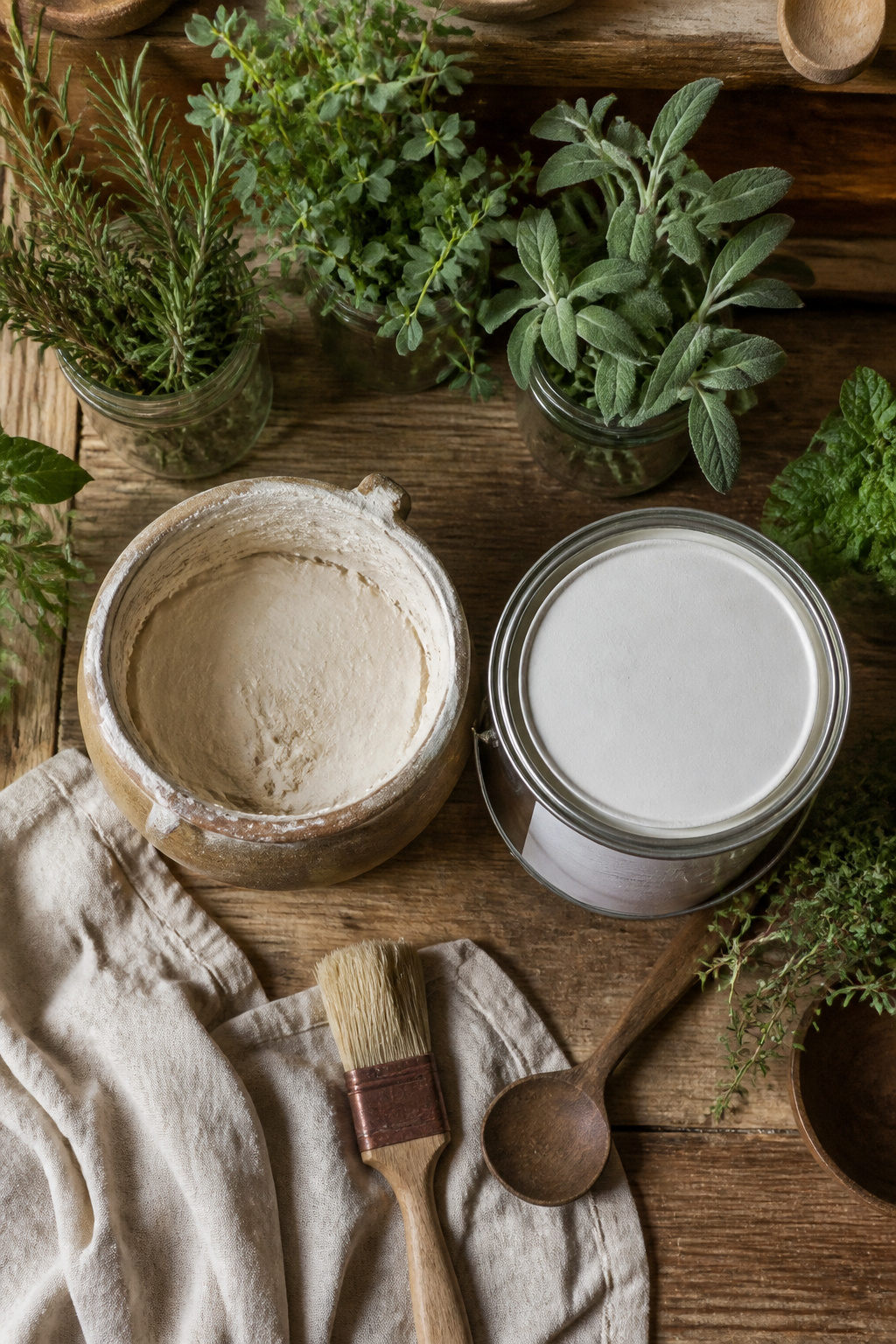
Limewash sits in the can as nothing more than lime, water, and pigment, all of it naturally occurring. That composition means no VOCs to breathe in while you work, no synthetic additives curing into the air of the room you just finished. The carbon dioxide it pulls from the air as it hardens is a small bonus, but the real relief is the absence of that sharp, headache-inducing off-gassing you get from conventional paint.
Whitewash is trickier. The traditional mix, limewash itself diluted further, carries the same clean profile. The problem is the shortcut: thinning standard latex or acrylic paint with water and calling it whitewash. Those formulations can hold volatile organic compounds, and the smell tells you immediately. The chemical bite hits while you are still brushing, hangs in the room for days, and in a space with limited airflow it can linger for weeks. Low-VOC paint exists, but someone mixing their own whitewash from whatever half-empty can is on the shelf rarely checks the label first.
For an afternoon project in a house you are living in, the difference matters. The limewash smell is mineral, faint, gone by morning. The latex-whitewash smell announces itself and stays for dinner.
How to Apply Each One
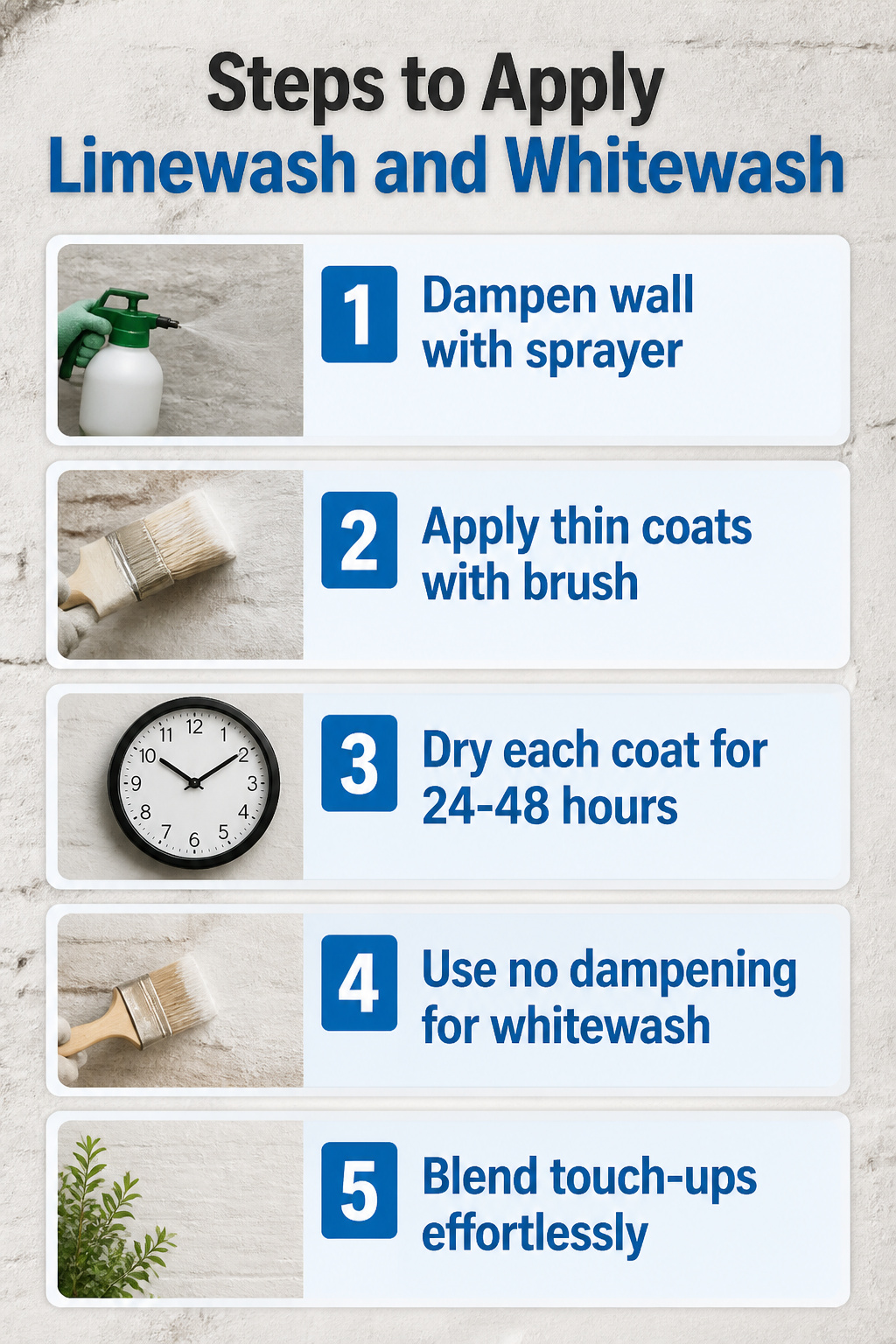
Surface prep is the same for both: brush off loose mortar, scrub away grease, and let the wall dry fully. Where they split is what happens next.
Limewash goes onto a dampened wall. The water opens the pores so the lime sinks in instead of sitting on top like skim milk. One afternoon I skipped that step on a dry stretch of garage brick, thinking the humidity was enough. The coat dried powdery and flaked within a month. I had to brush it off and start again, damp sponge in hand this time, and the second take held.
The sequence runs: dampen with a garden sprayer, work in thin coats with a masonry brush or roller, let each coat dry 24–48 hours before the next. Three coats usually gives the mottled depth that reads as intentional.
Whitewash is more forgiving. Brush, roll, or spray it onto a clean, dry surface and move on. No dampening, no cure-time anxiety, and touch-ups blend in without telling where old meets new. If you need to finish before sunset, whitewash is the one that lets you.
Keeping It Looking Right
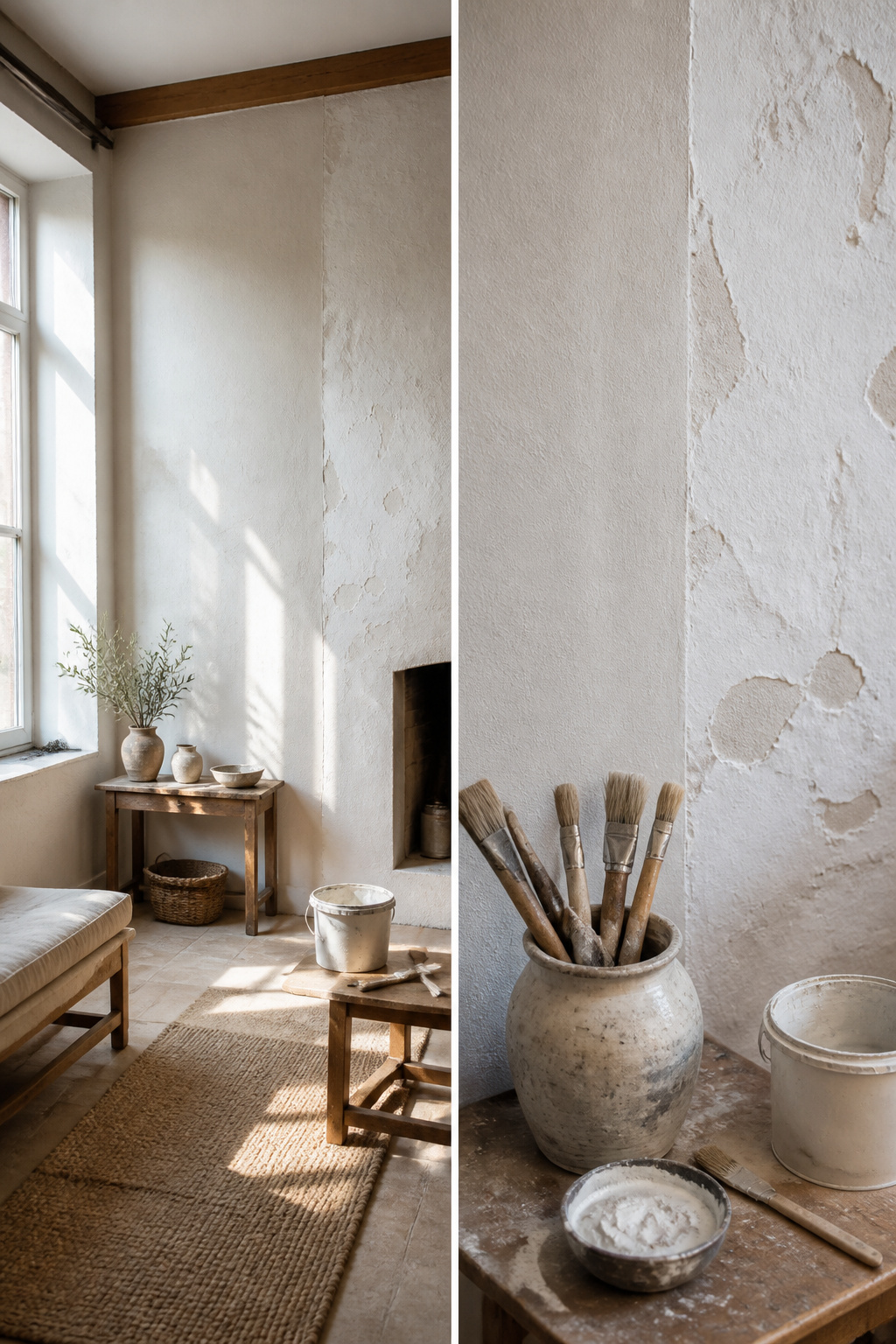
The maintenance rhythm surprised me most after the brushwork was done. Limewash settles in and holds for 5 to 7 years before it wants a renewal coat, sometimes stretching longer on sheltered interior walls. When that time comes, the fix is forgiving: thin a fresh batch to match the existing finish and work it into the patches that have worn thin or weathered uneven. The whole wall rarely needs redoing unless you want a completely reset surface.
Whitewash tells a less predictable story. A solid formulation can outlast limewash, sitting pretty for a decade or more, but a weaker mix or a harsh exposure can have you touching up every few years. Spot-fixing is trickier here because the new coat sits on the surface rather than sinking in, so the refreshed areas can read slightly brighter or chalkier against the old. Blending takes a lighter hand, and sometimes the cleaner look is simply to roll over the whole face again.
What I Paid and What Pros Charge
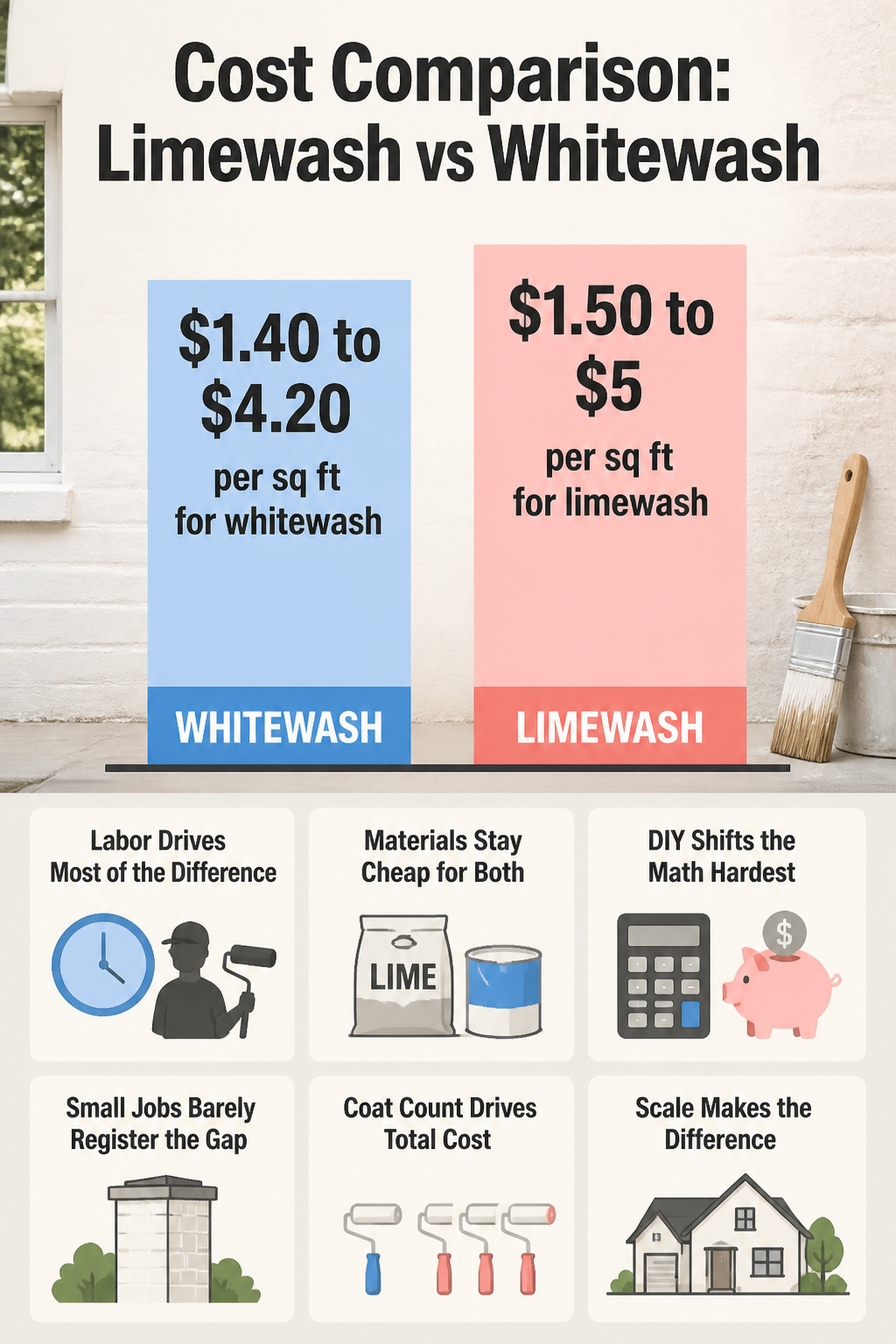
Whitewashing runs $1.40 to $4.20 per square foot; limewashing lands at $1.50 to $5. The gap widens with scale.
- Labor drives most of the difference. Whitewash usually covers in one coat. Limewash goes on thinner and often needs multiple passes, so painter hours stack up faster.
- Materials stay cheap for both. Whitewash uses common paint-store ingredients. Limewash needs specialized lime products, which nudges the material line a little higher.
- DIY shifts the math hardest on limewash. Stripping out labor, the material cost between them is nearly a wash. Doing it yourself, the $0.10–$0.80 per square foot spread that pros charge mostly disappears.
- Small jobs barely register the gap. A chimney or single accent wall won’t show enough surface for the coat-count to matter much in total dollars.
Color Choices and Where Each Stops
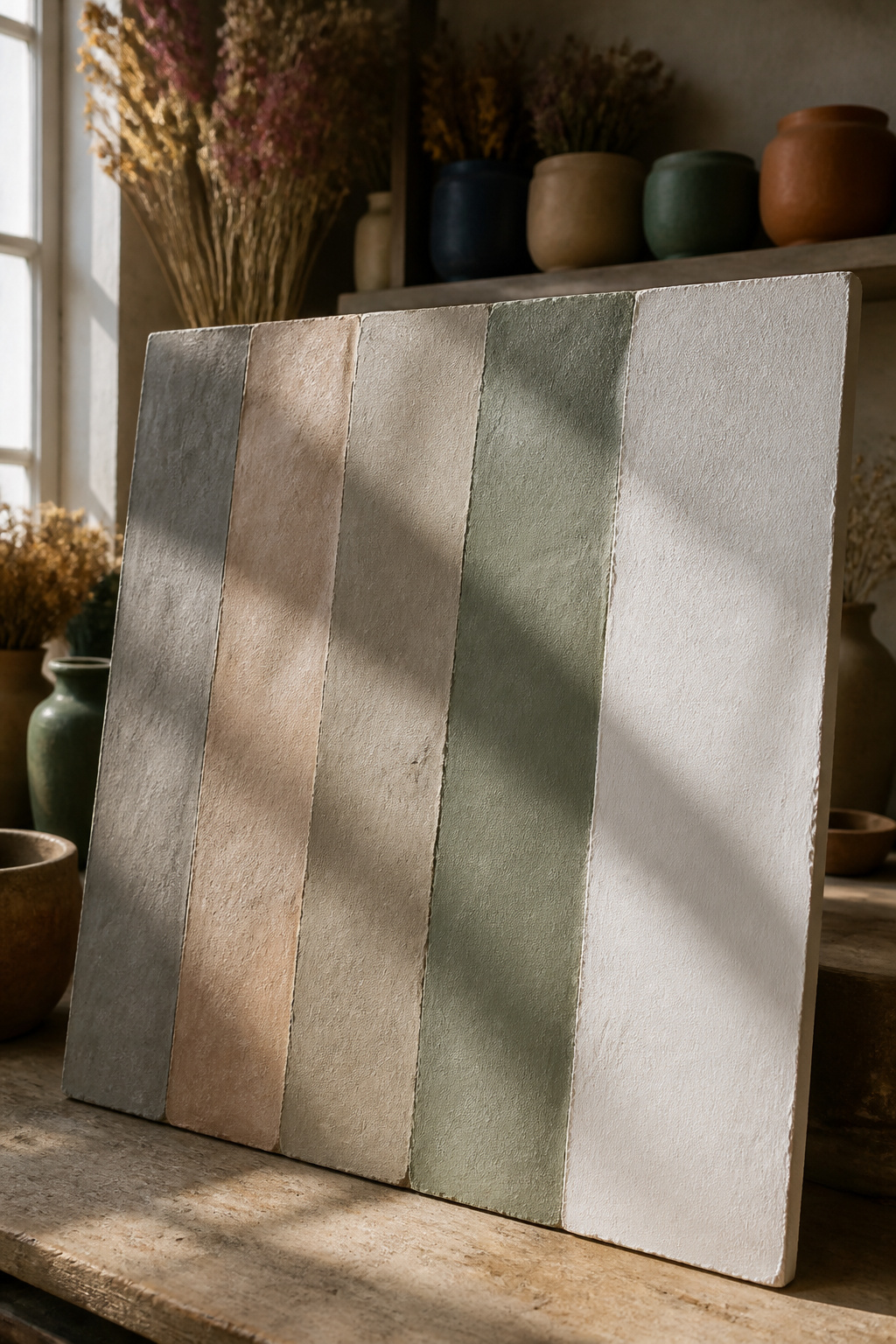
Limewash carries natural pigment in a way whitewash simply does not. The limestone base accepts mineral tints, turning out soft grays, browns, taupes, or muted greens that shift with the light across a wall. Whitewash stays bound to white and its quieter cousins, off-white and cream, because the name is also the recipe.
Too much pigment kills the chemistry. Heavy loads interfere with how limewash bonds to brick or plaster. Bright, saturated colors are nearly impossible; the finish turns chalky or fails to set, and the color you mixed wet dries lighter and cloudier than the sample suggested. Sources note you need at least three thin coats for decent coverage, and each layer lightens as it cures, so testing on a hidden patch is not optional, it is the only way to know what you are actually getting.
I have read enough accounts now to trust the pattern: limewash rewards patience with tone that breathes, but it will not give you the clean, predictable color a modern paint swatch promises. Whitewash, for all its limits, at least delivers exactly the white you started with.
Frequently Asked Questions
What is the difference between limewash and whitewash?
Limewash is made from slaked lime, water, and natural pigments that carbonate into the wall surface, creating a breathable, textured bond. Whitewash is typically diluted latex or acrylic paint thinned with water, which dries into a thin coating without chemically bonding to the substrate. The practical split is synthetic versus natural: one seals and covers fast, the other breathes and ages with the masonry.
How long does limewash last?
Limewash lasts about 5 to 7 years before needing a refresh coat. The finish keeps developing after application through carbonation, and when it does wear, a new thin coat revives it without stripping or sanding. Interior walls in sheltered spots sometimes stretch longer.
Can you use limewash and whitewash on the same surface?
Yes, but proper prep is essential. Limewash needs bare, clean, unsealed masonry so the lime can sink in and carbonate; any incompatible coating underneath causes flaking. Whitewash is more forgiving on various surfaces but still demands the right absorbency and water-to-paint ratio to avoid chipping. Switching from one to the other usually means stripping back to bare substrate first.