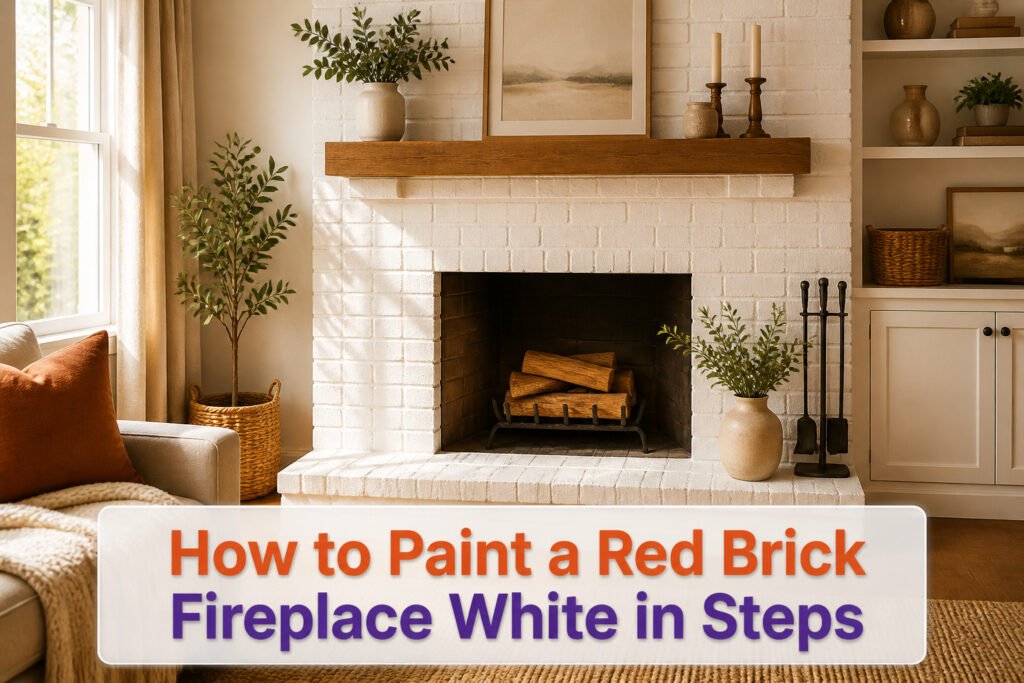
A fully painted red brick fireplace runs about $75 to $150 in primer and paint, plus a full weekend between cleaning, drying and two coats of primer. Most jobs fail at the first coat of primer: too thin, too rushed, or skipped entirely, and the red ghosts through the white by spring. The 24-hour dry time between primer and paint is not padding; it is what keeps the finish from bubbling when the brick breathes.
1. Prepare the Surface
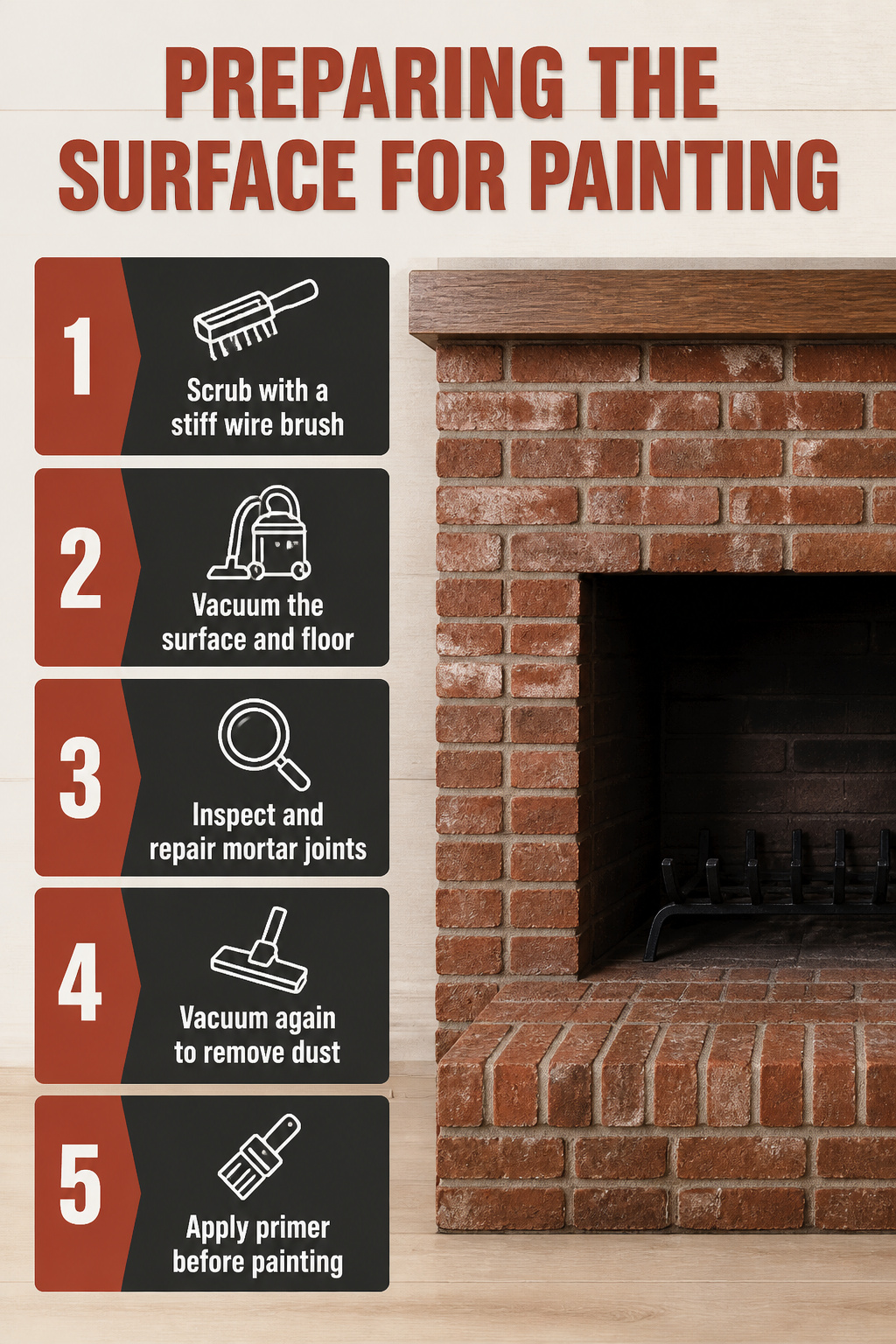
A stiff wire brush digs out the debris hiding in mortar lines better than anywhere else. That is where loose material collects, and paint over it will flake inside a year. Work the brush across every joint until the grit stops coming free.
Once the brushing is done, vacuum the surface and the floor around the fireplace. A shop vacuum handles this; a household vacuum with a brush attachment works too, though the finer brick dust may clog a standard bag faster than you expect. The brick should read as clean, not just look it, before the first coat of primer goes on.
This is also the moment to inspect the mortar for repairs. Tuckpointing after painting means cutting into finished work, so any crumbling joints get fixed now.
2. Clean the Brick

- Vacuum the fireplace from the top down first, paying extra attention to loose mortar and tight crevices where dust hides.
- Mix dish soap with water, or use a cleaner/degreaser like TSP or Insl-X All-Purpose Citrus Cleaner for heavy soot. Spot-test any cleaner on a small, hidden area first; some formulas can discolor brick.
- Scrub the entire surface with a stiff-bristled brush, working the cleaner into the mortar lines where residue collects deepest.
- Wipe with a sponge and fresh water to rinse, then go back with a damp rag on any spots that still feel gritty.
- Let the brick dry completely before moving on. Twenty-four hours is the safer bet; porous brick holds moisture longer than it looks, and primer on damp surfaces fails fast.
3. Apply Primer

A masonry primer is what separates a finish that lasts from one that flakes off in six months. The mortar lines are the weak spot, so those get hit first with a brush, worked into every joint until nothing porous shows through. Then the roller takes the broad faces. A 1/2 in. nap roller cover handles rougher brick, while 3/8 in. suits smoother surfaces. Either way, expect to burn through more primer than a wall of the same size; brick drinks the stuff.
Zinsser Bullseye Primer or Insl-X Aqua Lock Primer are the two worth grabbing. Two coats may be necessary if the brick has history with soot or you’re going light on top. Let it dry overnight. Rushing this step means the paint sits on a damp, half-sealed surface, and you’ll know it by spring.
4. Paint the Brick
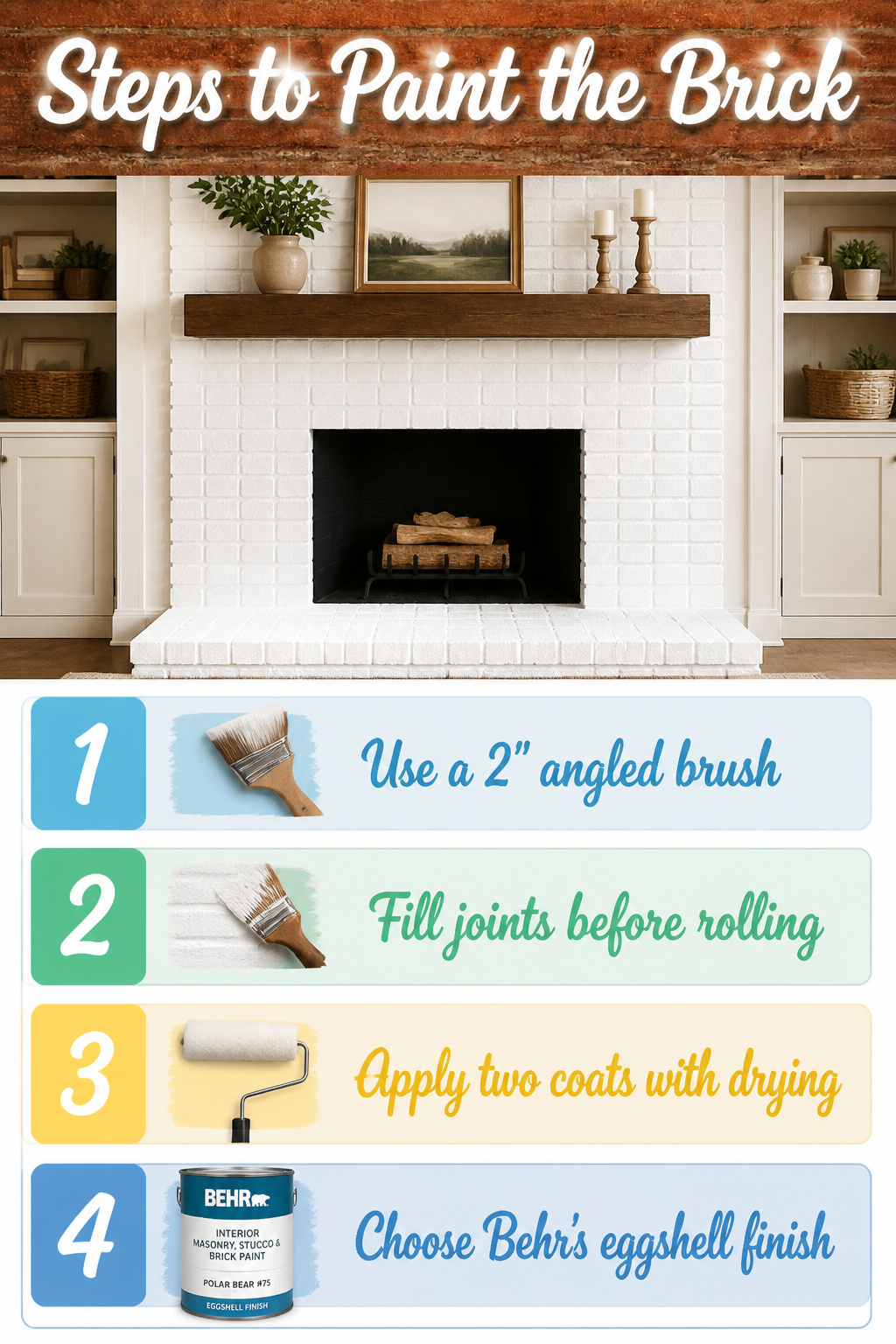
A 2" angled brush gets the paint into every mortar line before the roller ever touches the brick face. The brush work is slow, but skipping it leaves dark strips that show through even heavy coats. Once the joints are filled, a mini roller covers the flat surfaces fast and keeps the texture even.
Two coats minimum, with the first left to dry fully before the second goes on. Rushing that second coat pulls up the first and leaves patches.
Behr’s Polar Bear #75 in eggshell finish is the specific white that has worked for this job, though any interior masonry paint in a similar finish will cover. The eggshell level hides the slight unevenness of old brick without going flat, and Polar Bear reads clean rather than cream against typical room trim.
5. Finish Up
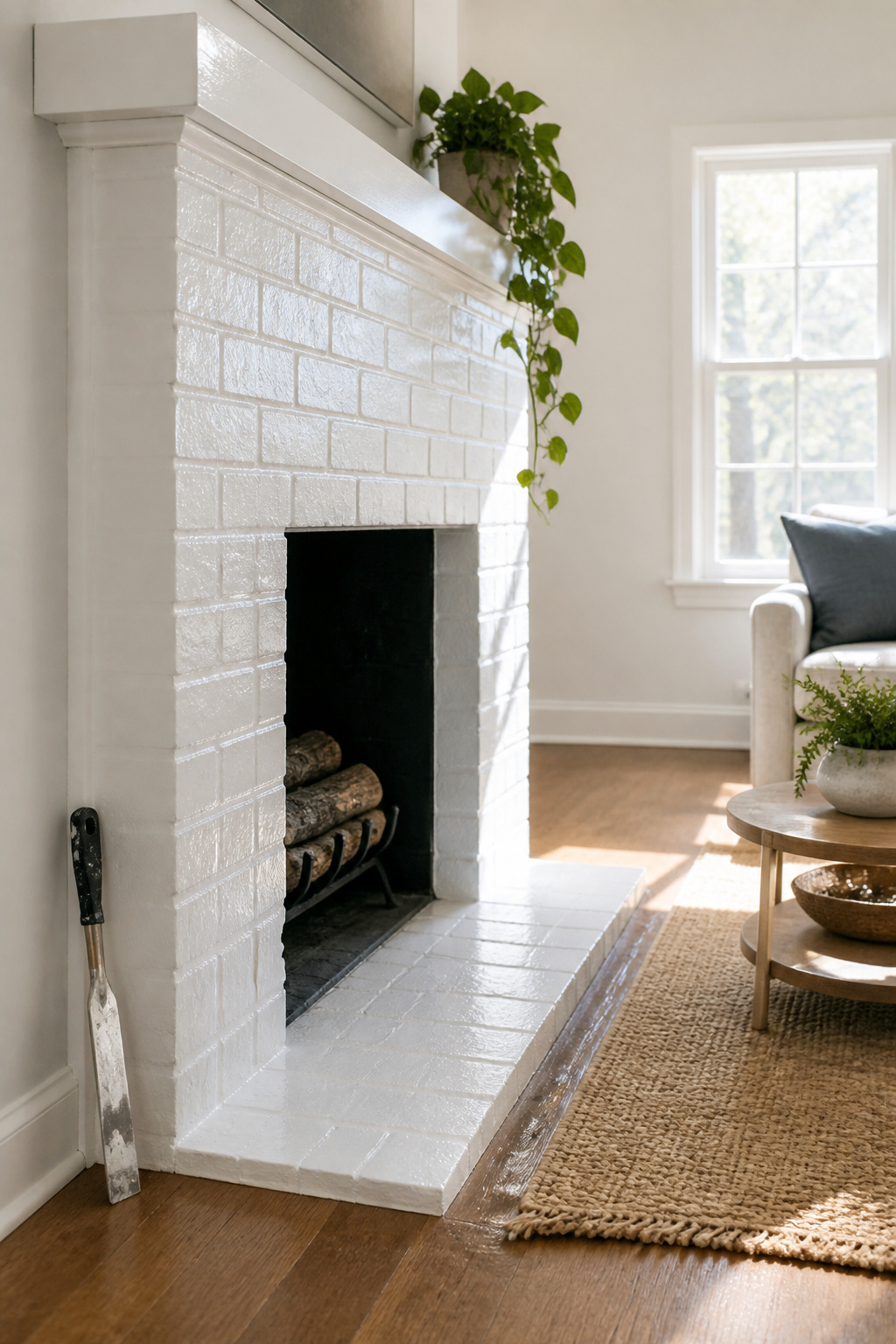
- Pull the tape while the paint is still slightly tacky, not after it has hardened overnight. Latex paint skins over in a couple of hours; waiting longer risks lifting chips off the new surface when you peel.
- Run a thin bead of paintable caulk along any seam where the fireplace meets the wall, the floor, or a mantel. The brick surface and the adjoining material almost never sit perfectly flush, and the caulk hides the ragged edge that brushing leaves behind.
- Smooth the bead with a wet finger, then let it skin before you touch it again. The finish reads as built-in rather than painted-over once that line is sealed.
6. Clean Up
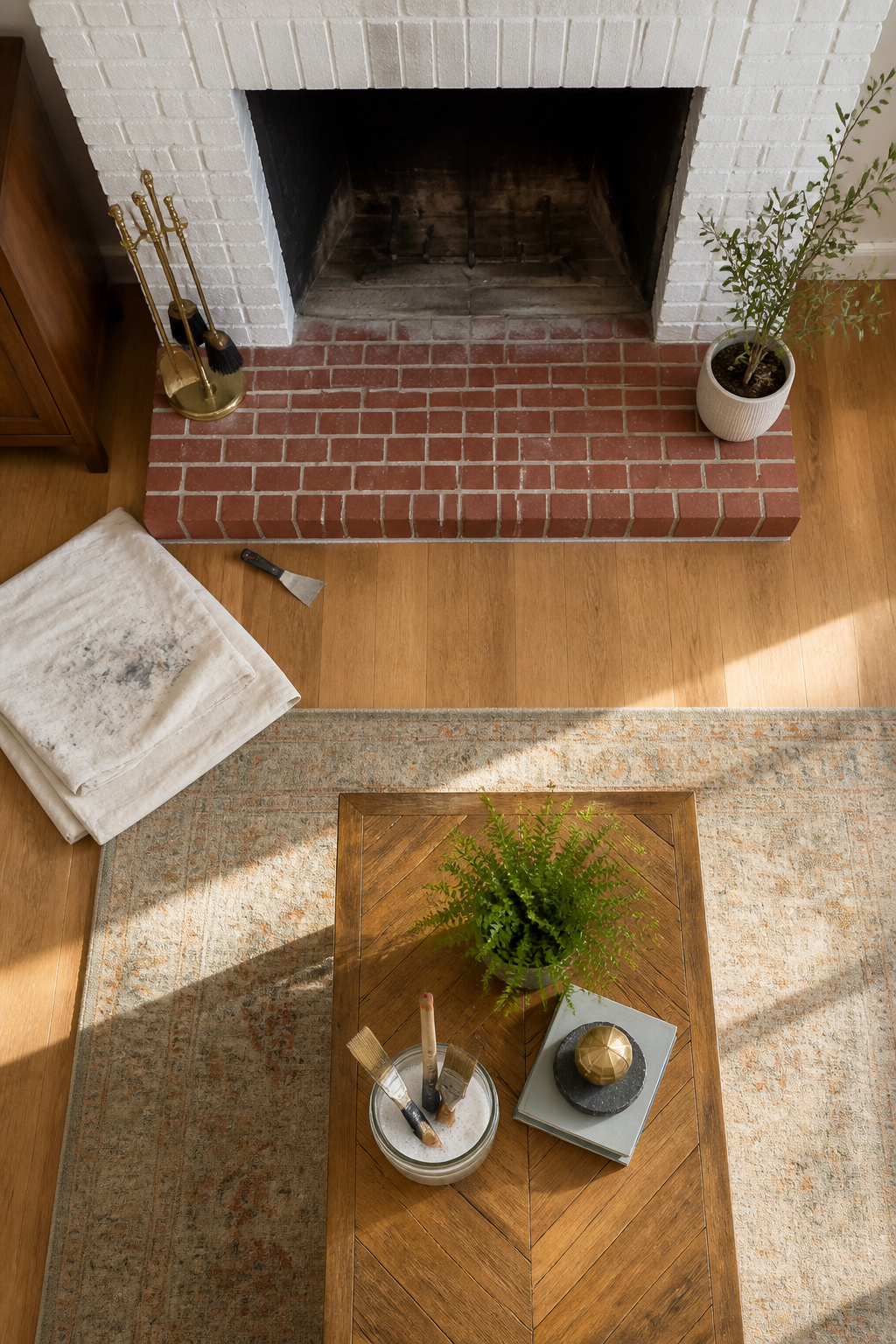
- Soap and cold water do the job on brushes used with latex paint; hot water cooks the binder into the bristles and ruins them. I run the tap over the ferrule, work the soap through with my fingers, and keep rinsing until the water coming out of the brush is clear. For oil-based primer, a small glass jar of mineral spirits lasts me months; I swish, wipe on a rag, and repeat until the rag stays clean.
- Dried paint on the hearth comes off with a plastic scraper held flat so it doesn’t gouge. A damp rag with a drop of dish soap lifts the smears from the floor, but I check the grout lines too; white paint on dark grout shows from across the room.
- The drop cloths come up last, folded inward so any flakes or dust stay trapped. The fireplace itself is still tacky and will be for a day or two, but the living room is usable again by evening if the brushes are clean and the furniture is back.
Primer and Paint Choices
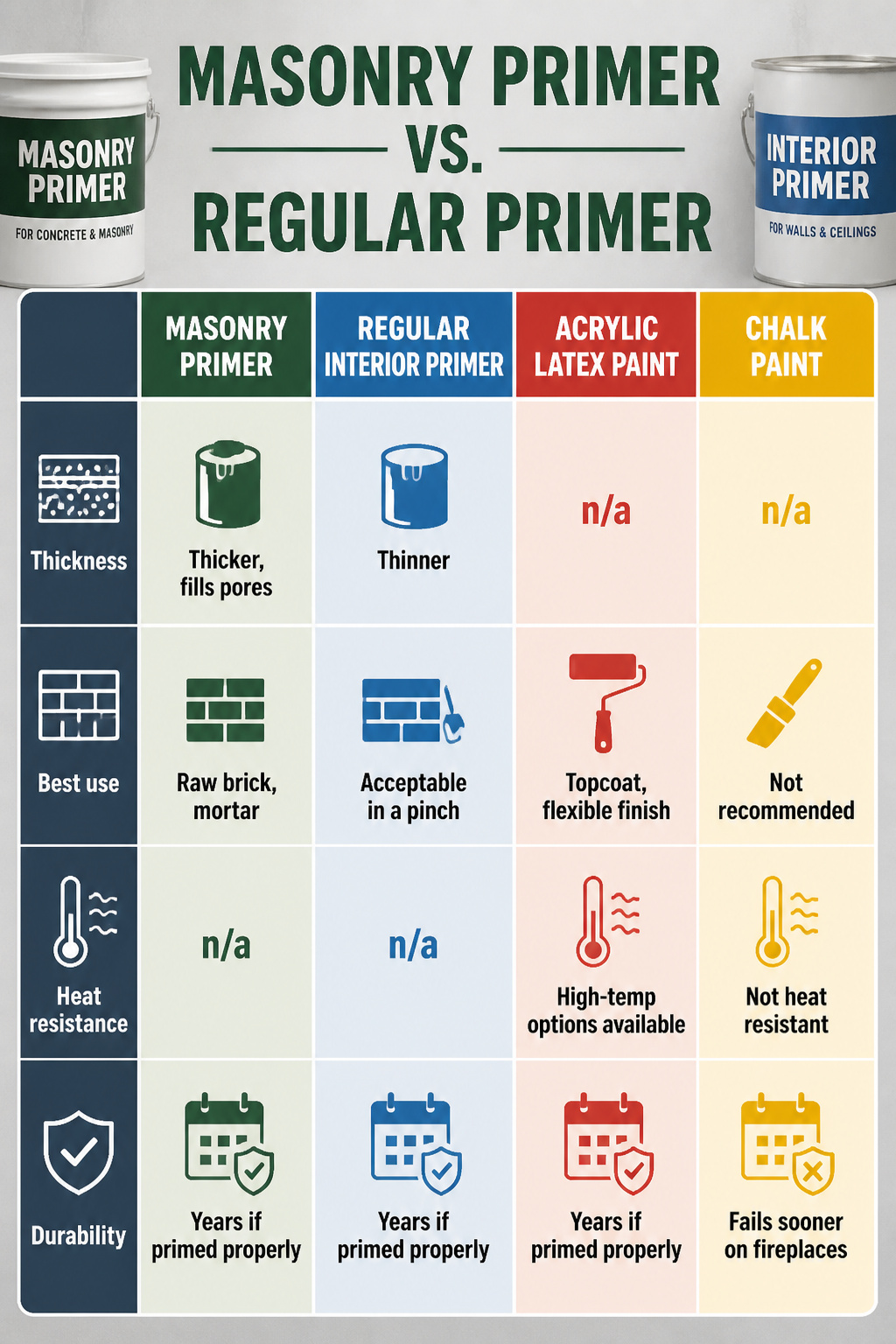
Masonry primer is thicker than the regular interior kind, and that thickness matters on porous brick. The surface will drink the first coat fast, so a product designed for concrete and masonry fills those pores instead of letting your paint disappear into them. A second coat of primer may be necessary if you are going lighter, and the overnight dry time is not optional.
For the topcoat, acrylic latex paint has the flexibility and color range most people want. Premium lines from Benjamin Moore or Sherwin-Williams are what the manufacturers themselves point to: Aura, Regal Select, or Advance from Benjamin Moore; ProClassic Waterborne Interior Acrylic Enamel from Sherwin-Williams, formulated to withstand high temperatures and resist sagging on vertical brick.
Chalk paint is the option that keeps coming up on Pinterest boards, and it is the wrong one here. It is not heat resistant, which turns a fireplace into a maintenance problem within a year or two. Paint over properly primed brick can last several years without issue; chalk paint over brick starts failing much sooner.
| Masonry primer | Regular interior primer | Acrylic latex paint | Chalk paint | |
|---|---|---|---|---|
| Thickness | Thicker, fills pores | Thinner | n/a | n/a |
| Best use | Raw brick, mortar | Acceptable in a pinch | Topcoat, flexible finish | Not recommended |
| Heat resistance | n/a | n/a | High-temp options available | Not heat resistant |
| Durability | Years if primed properly | Years if primed properly | Years if primed properly | Fails sooner on fireplaces |
We suggest using a premium Benjamin Moore paint like Aura® Interior, Regal® Select Interior, or Advance® Interior for beautiful results that last.
What that means in practice: skip the boutique finishes and buy once. The premium acrylic latex lines cost more per gallon, but they are formulated for the thermal cycling and surface adhesion a fireplace actually faces.
Cleaning Supplies and Methods

Brick holds onto soot, dust, and whatever the previous owners left behind, so the right tools make the difference between paint that grips and paint that flakes.
- A wire brush scrubs loose mortar and crumbling brick face. Run it across the surface and sweep debris onto the floor before it resettles.
- A shop vacuum picks up what the brush knocks free. A household vacuum usually chokes on brick grit and fine dust; the heavier suction matters here.
- Warm water with dish soap and a sponge tackle surface grime and older soot. The sponge soaks up dirty water instead of pushing it deeper into the pores.
- For greasy residue or years of fireplace use, a degreaser or trisodium phosphate cuts through what soap won’t. Rinse after and let the brick dry completely; overnight is safer than guessing.
- Rags finish the job, wiping corners and ledges the vacuum misses. Skip the fancy ones, old cloth works fine.
The cleaner the surface, the less primer fights to stick. That overnight dry time is worth more than the hour it saves to rush ahead.
Common Mistakes
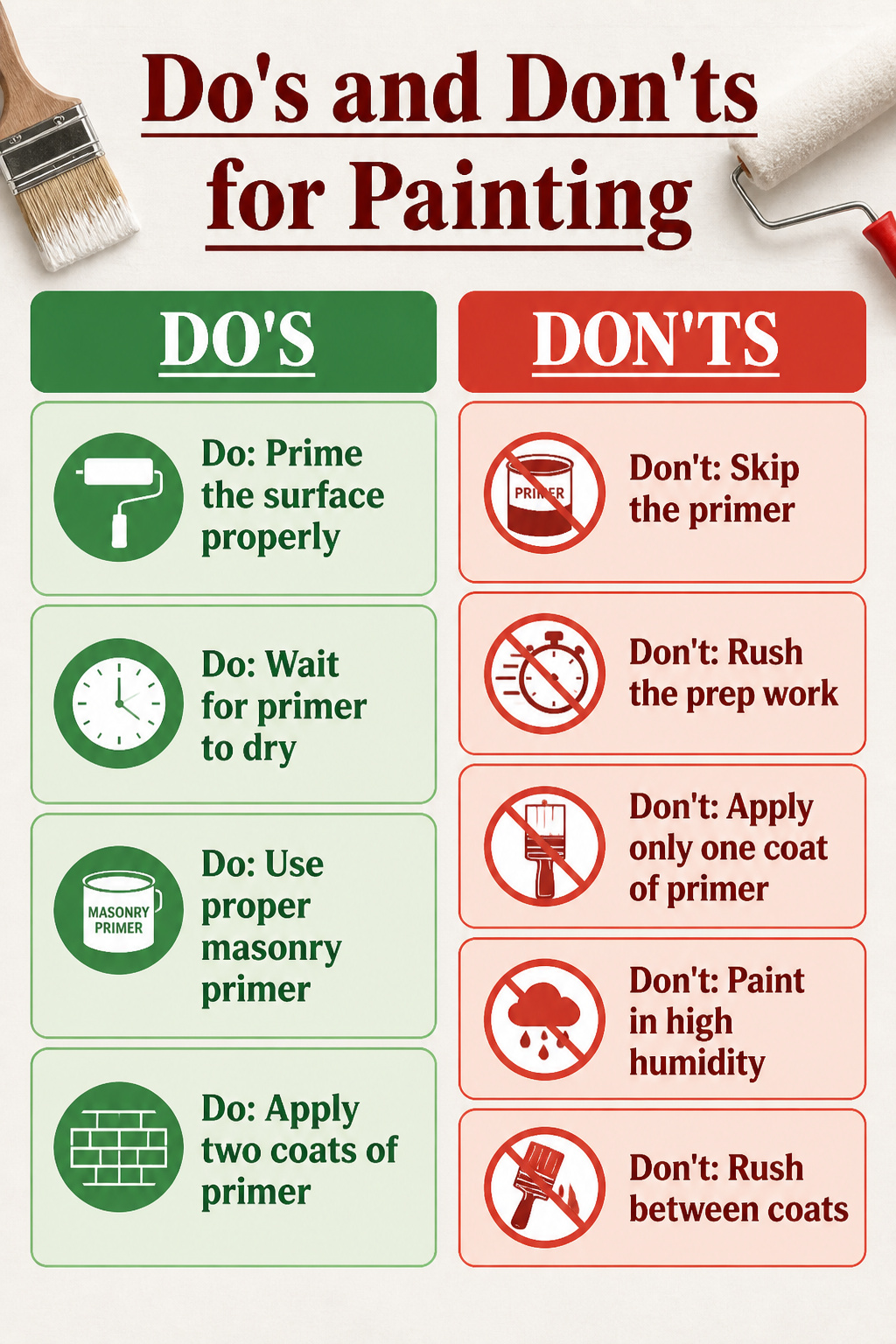
Rushing the prep work or skipping the primer outright is where most fireplace paint jobs fail. The brick is porous, and standard acrylic latex paint sitting directly on raw masonry will soak in unevenly, darken over time, or peel when moisture moves through the wall.
- Skipping primer leaves the brick vulnerable to alkali burn and efflorescence, the white, chalky deposits that push through and ruin a light topcoat; a quality concrete and masonry primer gives the alkali resistance that standard paint lacks
- A single coat of primer often is not enough under white paint; the deep red of the brick will ghost through and yellow the finish, so two coats of primer are the safer bet for a clean, bright result
- Humidity is the hidden enemy. In dry climates, unprimed brick might hold up longer, but in damp or rainy seasons, moisture trapped behind the paint film causes spotting and bubbling that no amount of topcoat will fix
- The wrong primer type matters too. Masonry primer is thicker and formulated for this exact job; a generic interior primer in a pinch is better than nothing, though not the equal of a true masonry formula like DRYLOK Wet Wall Bonding Primer or Behr Masonry Primer
- Primer needs overnight drying before the topcoat goes on; painting into wet primer locks solvent in and guarantees adhesion problems later
Alternative Finishes
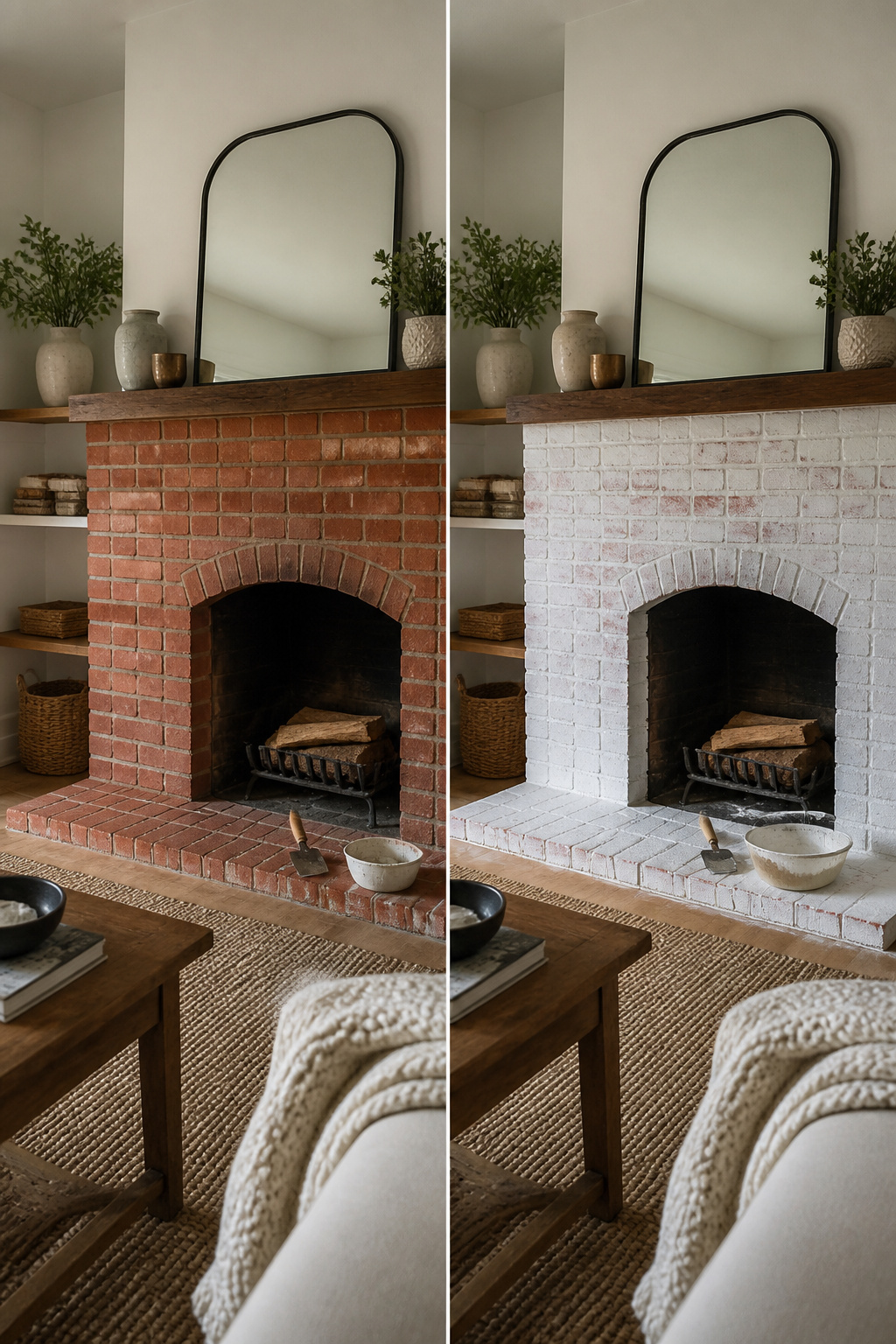
A full coat of paint is not the only route. Three other finishes come up often enough that they deserve a real look before you open a can.
- Chalk paint gives brick a soft, matte, almost dusty texture that reads more cottage than crisp modern. The catch is heat. Most chalk paint formulas are not rated for fireplace temperatures, so this one belongs on a surround that never sees direct flame or on a decorative facade.
- German Schmear means troweling actual mortar over the brick, then rubbing some of it back off before it sets. What stays behind fills the grout lines and skims the faces unevenly, giving you the look of old European plaster. It is labor-heavy and permanent, so commitment matters.
- Whitewashing mixes one part paint to one part water. The diluted coat soaks in rather than sitting on top, which means the brick’s texture and some of its color still show through. One source used Simply White by Benjamin Moore at that ratio and described the result as drippy and watery going on. Solid paint, by contrast, erases the brick entirely. The tradeoff is coverage versus character: whitewash keeps the history, paint gives you a blank slate.
Frequently Asked Questions
Is painting a brick fireplace a good idea?
Yes. Painting a brick fireplace refreshes the living area with relatively little effort and costs less than painting an entire room. The project adds depth and character to the space when the surface is properly prepared first.
What kind of paint do you use on a brick fireplace?
Use a premium acrylic latex paint for the topcoat. Behr’s Polar Bear #75 in eggshell finish is one specific option that reads clean against typical room trim. Premium lines from Benjamin Moore, such as Aura, Regal Select, or Advance, and Sherwin-Williams ProClassic Waterborne Interior Acrylic Enamel are formulated to withstand high temperatures and resist sagging on vertical brick.
Do you need to prime a brick fireplace before painting?
Yes, primer is essential. A masonry primer is thicker than regular interior primer and fills the pores in porous brick, preventing the paint from disappearing into the surface. Skipping primer leaves the brick vulnerable to alkali burn and efflorescence, the white, chalky deposits that can ruin a light topcoat. Two coats of primer may be necessary when painting over deep red brick with white paint.
How long does a painted brick fireplace last?
A painted brick fireplace can last several years with proper preparation and application. The actual lifespan depends on factors including prep work, primer quality, and the paint used. Using premium paints and allowing proper dry times between coats, including overnight drying for primer, extends durability.
What is the best color to paint a fireplace?
White is the most common choice, with Behr’s Polar Bear #75 as a specific clean white that avoids cream tones against typical trim. Neutrals like gray and taupe work well, and bolder colors like charcoal or deep green are also options. The eggshell finish hides slight unevenness in old brick without going completely flat.