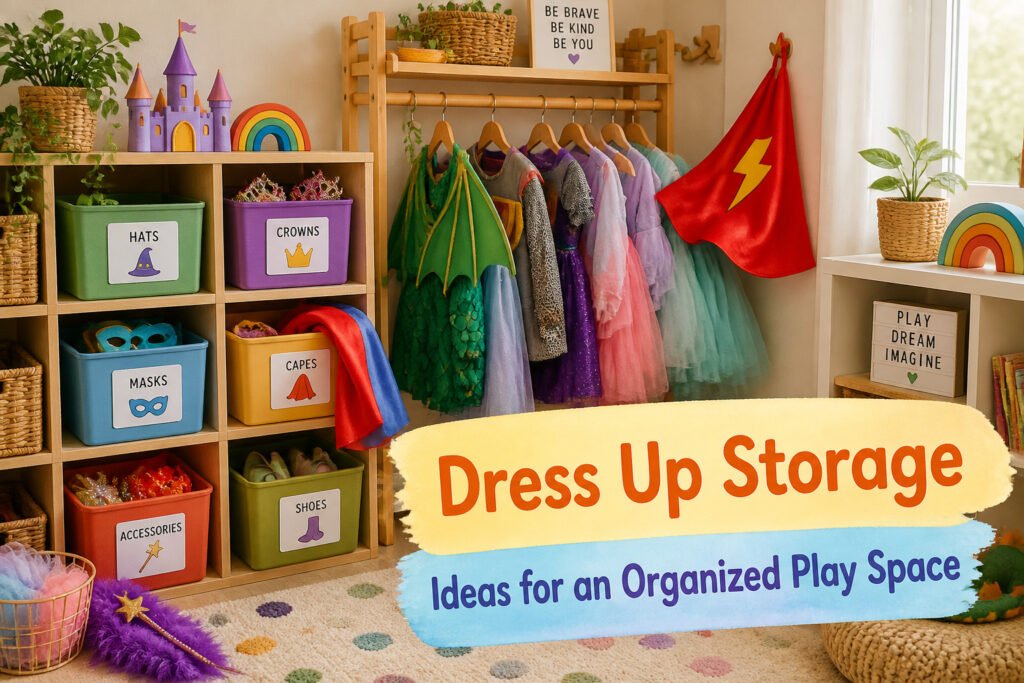
Dress up storage is any system that keeps costumes, accessories, and pretend-play gear where kids can reach them without destroying the room. The catch is that most setups fail within a week because a three-year-old will not dig through four identical bins to find a knight helmet, and a tulle skirt left crumpled for three days stays a ball forever. My own first attempt, a 30-gallon snap-lid bin, solved the explosion problem but created a lost-shoe migration at the bottom and crushed anything with layers.
Dress Up Trunk
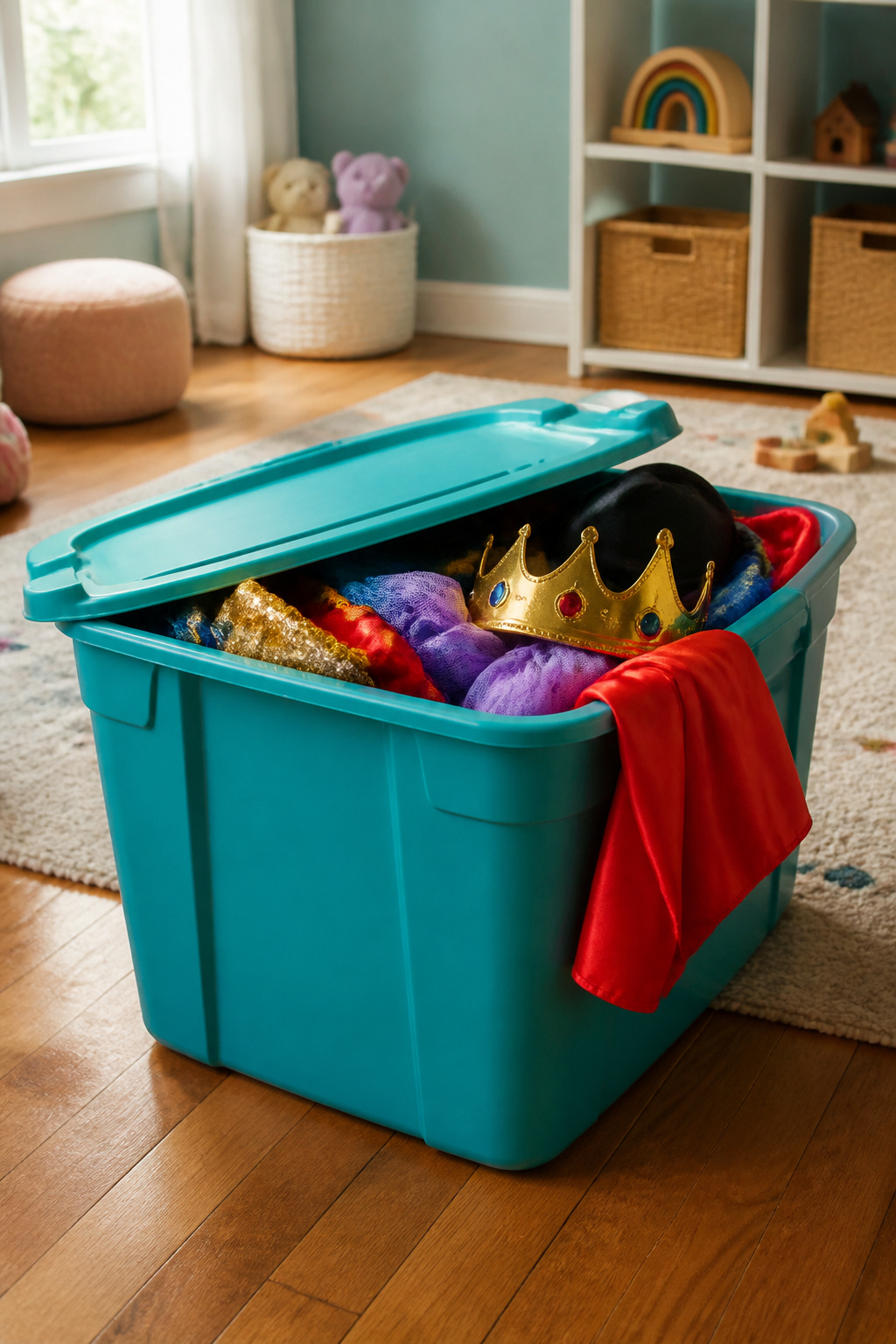
A dress up trunk does not have to be a trunk at all. Any large container works. A toy box, a plastic storage bin, even a hamper can hold the collection. The real question is whether the convenience is worth the wrinkles.
My own setup started in a 30-gallon bin with a snap lid. The kids could flip it open, pull out a cape or a crown, and shove everything back in ten seconds flat. That independence is the whole appeal. No one needs help reaching a hanger or wrestling a zipper onto a rod. The bin also slid under the bed when company came, which kept the playroom from looking like a costume shop exploded in it.
The tradeoff showed up fast. A tulle skirt left in a ball for three days stays a ball forever. Accessories migrated to the bottom and stayed there. I tried bagging individual costumes in large Ziplock Big Bags, which solved the lost-shoe problem but not the crushed-tulle one. The bin is still in rotation for bulky items like foam armor, but anything with layers lives elsewhere now.
Hanging Rod

A hanging rod keeps costumes off the floor and, more importantly, wrinkle-free so capes and gowns stay ready for the next performance. Kid-sized velvet hangers make the difference here: the non-slip surface grabs satin and sequined fabric even when small hands miss the bar entirely. I paired mine with a three-cube organizer set vertically beside it, creating cubbies for masks, crowns, and the plastic swords that never seem to fit anywhere else.
Where I mounted the rod mattered as much as the rod itself. I placed it 36 inches from the floor, low enough that my kid could reach every hanger without climbing, and anchored it into wall studs rather than drywall after a tension rod pulled loose under the weight of a heavy knight costume. Tension rods work for lighter play clothes, but a secured rod holds the full collection without sagging or surprise collapses during the morning rush to become Spider-Man.
Storage Bins

Smaller accessories are where dress-up storage falls apart fastest. A bin for hats becomes a bin for everything, and then nothing gets found.
Picture labels solve this before kids can read. My youngest needed the image to know where her tiaras and wands belonged, and the system only worked because the picture matched the bin, not the shelf it sat on. Bins sized for the item, not the shelf, keep categories honest. A bin too large turns into a black hole; one too tight and nothing goes back in after play.
Clear boxes earn their place for jewelry. Seeing the beads and clips matters more than hiding them, and the color itself becomes the invitation to play. Opaque baskets look tidier on the outside, but what kids cannot see, they do not use.
Shoe-size compartments handle the odds and ends better than open bins: gloves, sunglasses, the single tiara missing its match. The tighter the fit, the less becomes lost.
Wall Hooks

Wall hooks keep capes, feather boas, and butterfly wings at eye level where kids can grab them without rummaging. A belt or tie hanger mounted on the wall works better than the closet rod for accessories that slide off standard hangers; one holds a surprising pile in a footprint barely wider than a picture frame.
Costume shoes are the trickier piece. Tiffany’s rain gutter variation mounts a vinyl gutter low on the wall, pairing by pair, so mates stay visible and together instead of jumbled in a bin. The shallow lip keeps heels from tipping out while still letting small hands reach in.
I used standard drywall anchors the first time. They held until winter, when the humidity shift and a loaded gutter of rain boots pulled the left end clean out. Toggle bolts fixed it, but the patch job taught me to check the wall type before loading anything that catches weight at an angle.
DIY Dress Up Closet

A bookshelf with the back panel popped out makes a better dress-up closet than most store-bought options, and the price is usually the cost of a tension rod and an afternoon. I started with a 30-inch wide laminate unit my neighbor was tossing, sanded the shelf holes smooth, and threaded a rod through two of them at hanging height. The rod flexed under a velvet cape and plastic knight armor, so I moved the heaviest pieces to a hook rail on the side and kept the rod for gauzy fairy wings and lightweight tunics. Kid-sized hangers fit the scale, and the ones with adjustable necks have lasted through three Halloweens now. An old dresser works the same way with the drawers removed; a reader I came across while researching this used duct tape and a dowel where the middle drawer had been, which is clever if you already have the furniture sitting in the garage. Whichever base you choose, anchor it to the wall. Costumes get pulled on with force, and a tip-over turns the project from storage into hazard.
Tension Rods

A tension rod slips into a closet or an awkward gap between furniture and wall without a single screw, which makes it tempting for lightweight capes and tutus. Becky wedged one between her daughter’s cubby organizer and closet wall, and Rachel ran a ribbon-wrapped broom handle across a similar span. Both work because the load stays light.
The catch showed up in my own hallway setup last spring. A rod rated for what I assumed was plenty of costume weight pulled free under a velvet cape and a plastic knight’s breastplate, dumping the whole pile at my feet. I had ignored the obvious: tension rods grip by friction alone, and a secure closet rod they are not. I now treat 10 pounds as the practical ceiling, even if the packaging suggests more, because drywall flexes and kids yank. Very heavy costumes need a mounted rod or a different system entirely.
Dress Up Stations
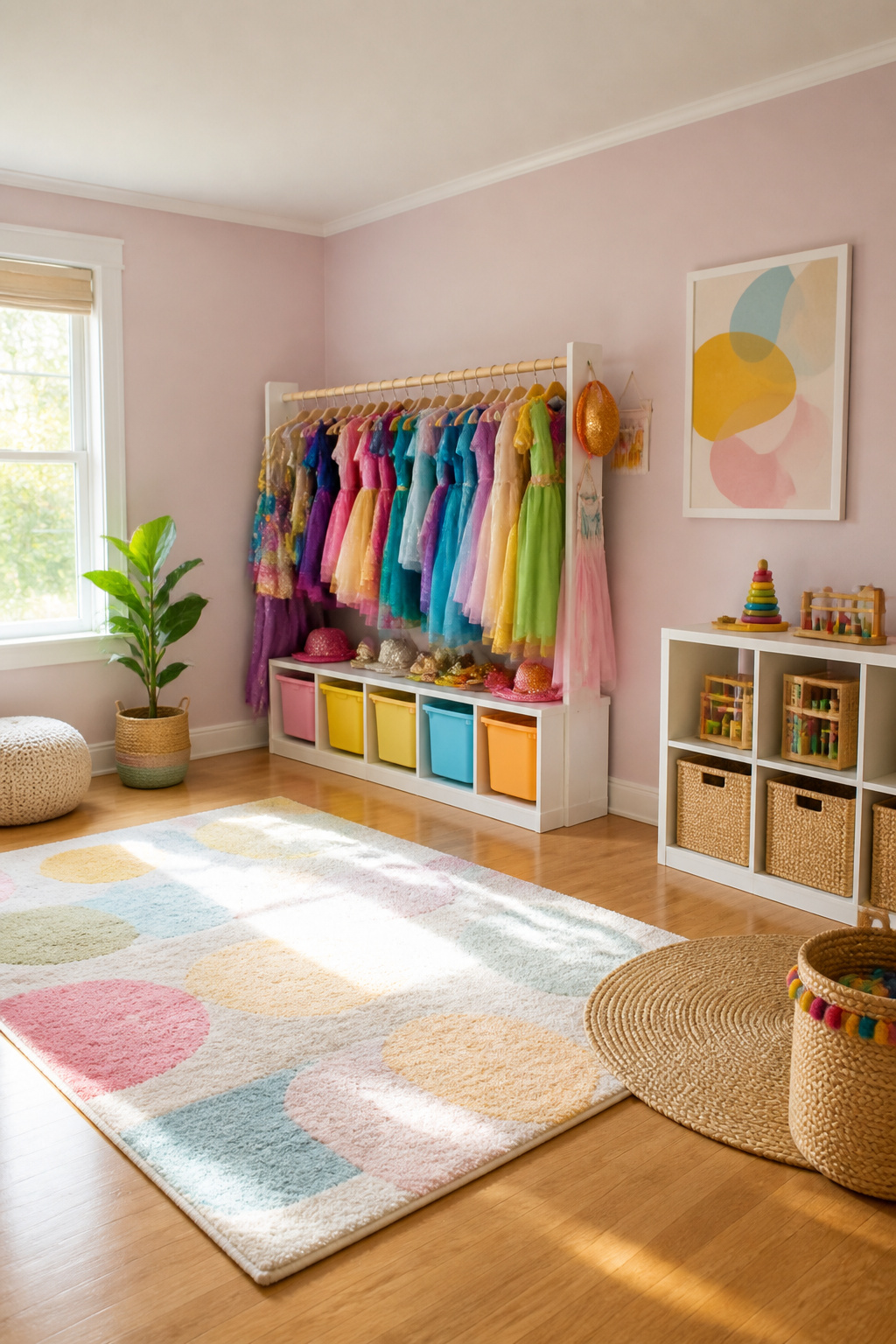
A premade dress up station with a hanging rod and bins underneath covers the two jobs costumes create: the clothes themselves, and the gloves, tiaras, and shoes that scatter everywhere. The ones I looked at were all stand-alone units, which meant I could park one against a wall without drilling into anything, and the bin-plus-rod setup matched how fast kids actually cycle through outfits. One kid in, one kid out, and the accessories stay corralled.
I also considered a rolling clothes cart, the kind with a single bar and maybe a shelf below. It moves, which is useful if the play space doubles as something else by dinner, and it costs less than most dedicated stations. What worried me was stability. A cart with casters and a four-year-old pulling a cape off the bottom bar tips fast, so I checked for a wide base and a brake on at least two wheels. The station won on that point, and on having enough compartments that the small stuff did not become floor litter.
What my kid actually used surprised me. The hanging rod saw constant traffic. The mirror, if there was one, got ignored in favor of the bathroom mirror down the hall. The shoe bin was useful to me for cleanup, but she would just as happily have left boots in a pile. A station without a mirror saves money and space, since they will find one anyway.
Kid-Friendly Labels
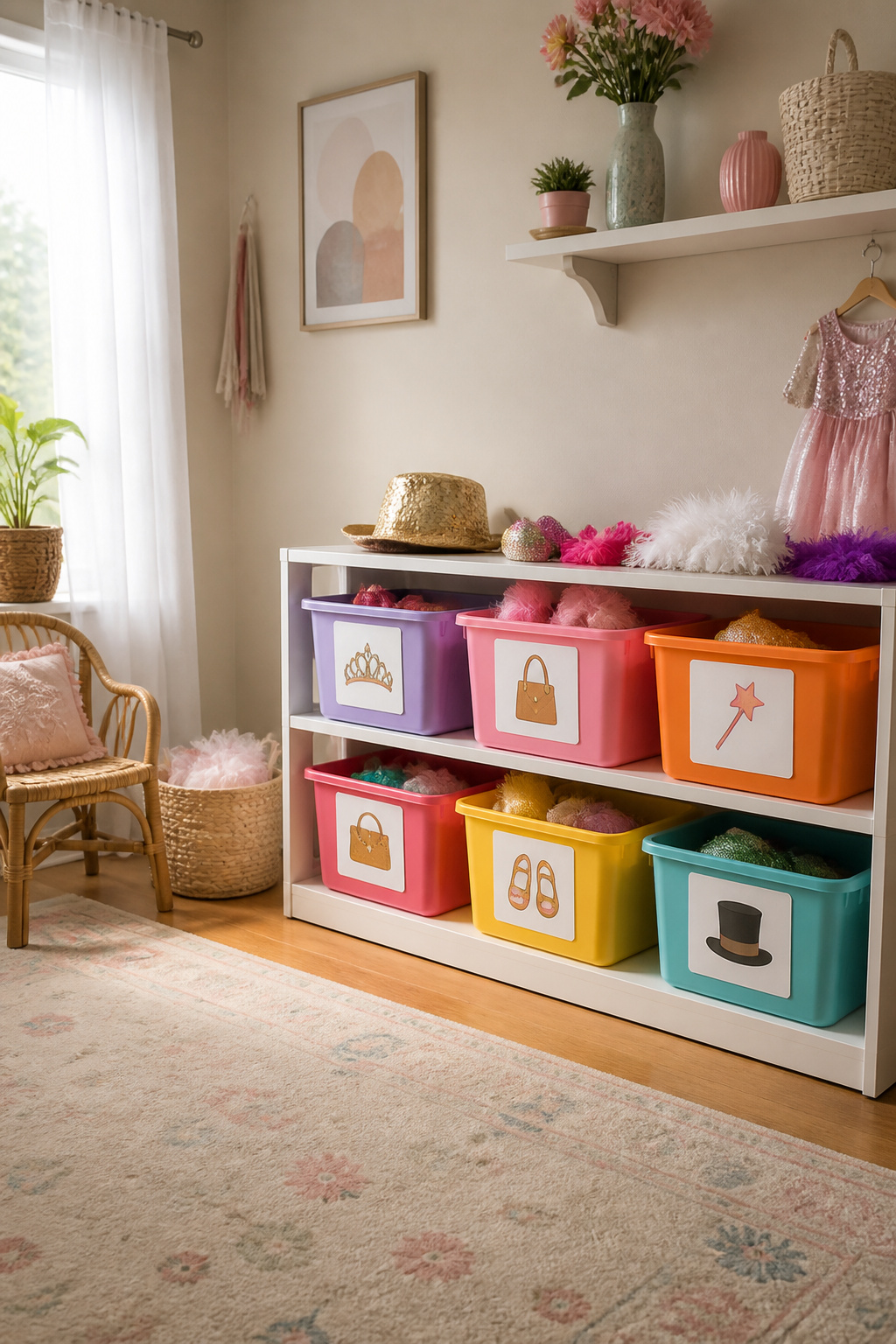
Opaque baskets hide the mess, but they also hide the costumes. A three-year-old will not dig through four identical bins to find the knight helmet. Picture labels are what make independent cleanup possible for pre-readers, and they matter more than the cute font you picked for the basket tags.
I tried matching the dress-up labels to the dresser drawer labels in my kid’s room, cut from writable vinyl on a Cricut Joy. The system worked until about age five, when the pictures became unnecessary and the labels themselves turned into a peeling distraction. By then the habit was set, and the baskets stayed organized without them.
Velvet kid-sized hangers served the same purpose for the hanging costumes. The non-slip surface kept a Spider-Man suit from sliding onto the floor even when the hanger was hung crooked, which meant my kid could actually manage the put-away step alone. The visual cue of seeing Batman and Storm Trooper costumes at eye level, rather than stuffed in a bottom bin, changed how often they got worn at all.
Labels earn their keep during the habit-building years. After that, the structure you built does the work and the stickers can come off.
Making It Reachable
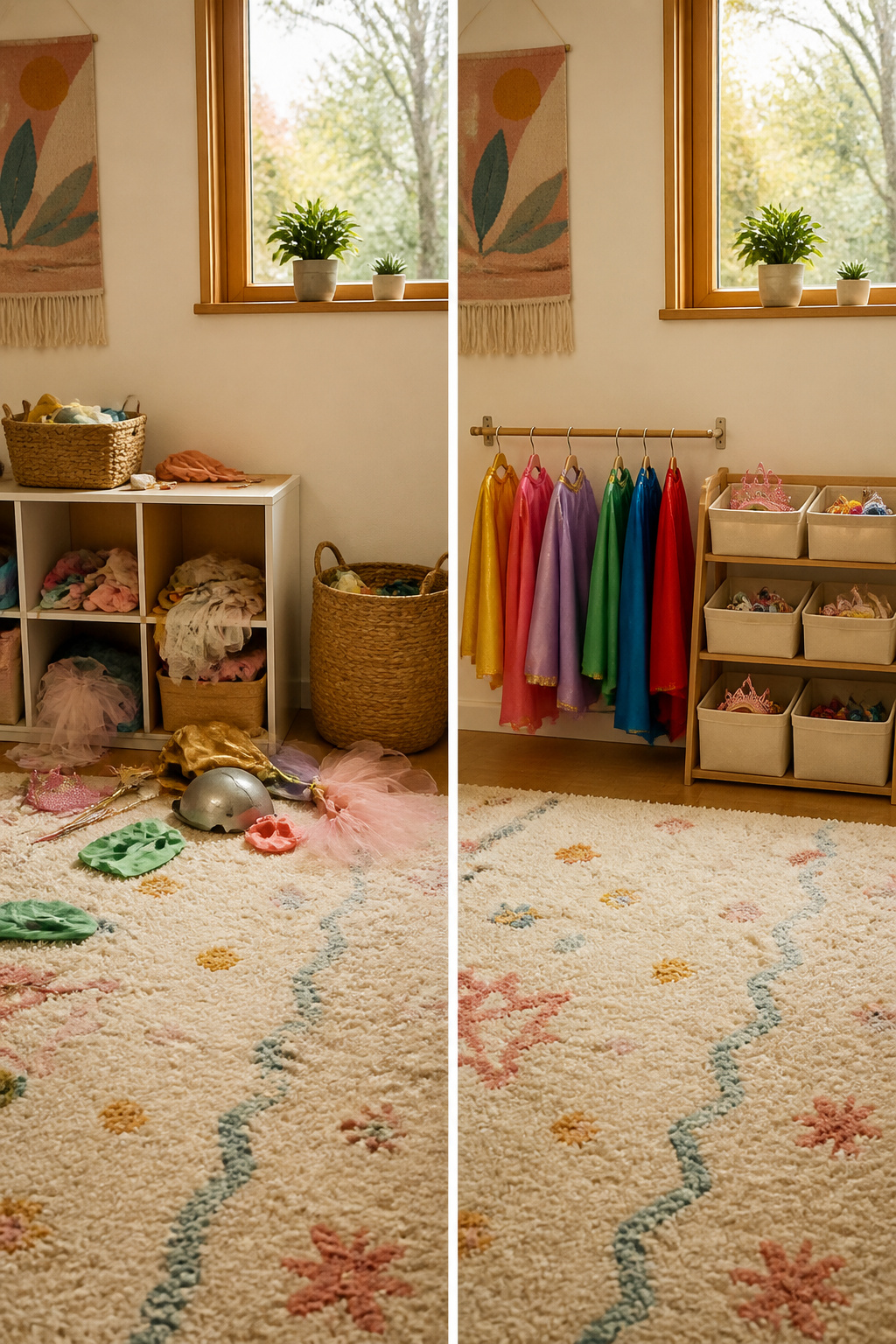
Low rods and open bins beat a tidy system that needs adult help. When my daughter was three, the capes lived on a board with pegs low enough that she could grab the one she wanted and, just as important, put it back herself. The independence mattered more than straight rows. I added a tension rod between her cubby unit and the closet wall when she turned six. The rod holds less weight than a proper closet rod, so heavy costumes still land elsewhere, but she can reach everything without asking. Labels came later, once the baskets were opaque enough to hide the mess but see-through enough that she ignored them. Kid-friendly tags solved that. The setup still shifts as she grows: lower for the toddler years, then slightly higher with a step stool in reach, then higher still when she stops needing one. What stays constant is that she uses it alone.
Sorting What Goes Where

Costumes and accessories play by different rules, and treating them like one category is where most dress up storage ideas fall apart in practice. Full-body pieces need room to spread out or hang; hats, jewelry, wands, and wings tangle and scatter if they share that same breathing room. My own first attempt at sorting went wrong when I grouped everything by character instead of by type, thinking my kid would keep the pirate hat with the pirate coat. Within a week the pirate hat lived in the princess bin and three wands had migrated to the shoe pile.
What actually stuck was a simpler split: clothing on one side, every small item in its own labeled basket on the other. Opaque baskets hide the mess, but a picture label on the front keeps kids from emptying three bins to find one tiara. The top basket holds tiaras and wands, the middle one hats, the bottom one anything that doesn’t hang well like leotards and tutus. My kid maintains the basket system because each container has one job; the clothing side still needs a reset every few weeks, but the small stuff stays sorted.
Using the Space You Have
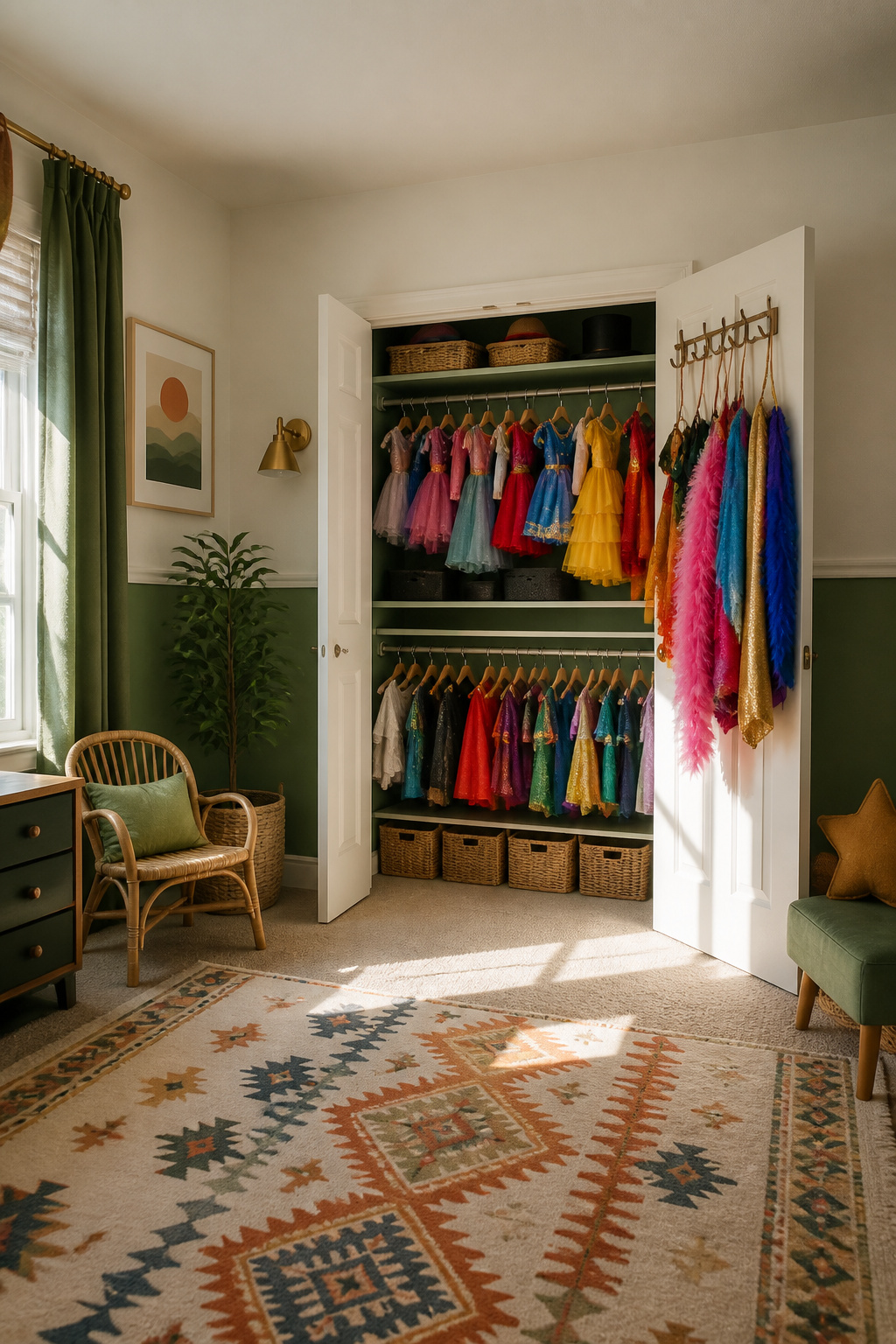
The closet in our boys’ shared bedroom was mostly unused since their everyday clothes live in drawers, and that turned out to be the spot I almost walked past. I cleared the hanging rod and added a second one at 32 inches off the floor so costumes hang at kid height while the upper rod keeps out-of-season pieces out of the way. The floor space underneath fits a large storage bin for stuffed animals that get drafted into dress-up play, and a belt hanger on the back of the door corrals feather boas and capes without eating wall space.
Wall-mounted vinyl rain gutters cut into 2-foot sections and screwed above the bed replaced a bulky bookshelf and storage ottoman that were eating floor space in our small house. Three gutters hold board books; two hold dress-up shoes where small hands can reach them. The whole swap cost about $6 at The Home Depot, and they cut the 10-foot section for free.
For under-bed storage, shallow built-in bookcases along the hallway wall hold what won’t fit in the closet. I tried clear boxes for jewelry and hair clips so the color shows through, but the real win was stacking suitcases at the top of the closet to rotate costumes in and out. Items she hasn’t touched in a month go up; anything new or forgotten comes down, and the clutter stays in check without buying more bins.
Why It Should Look Like Something
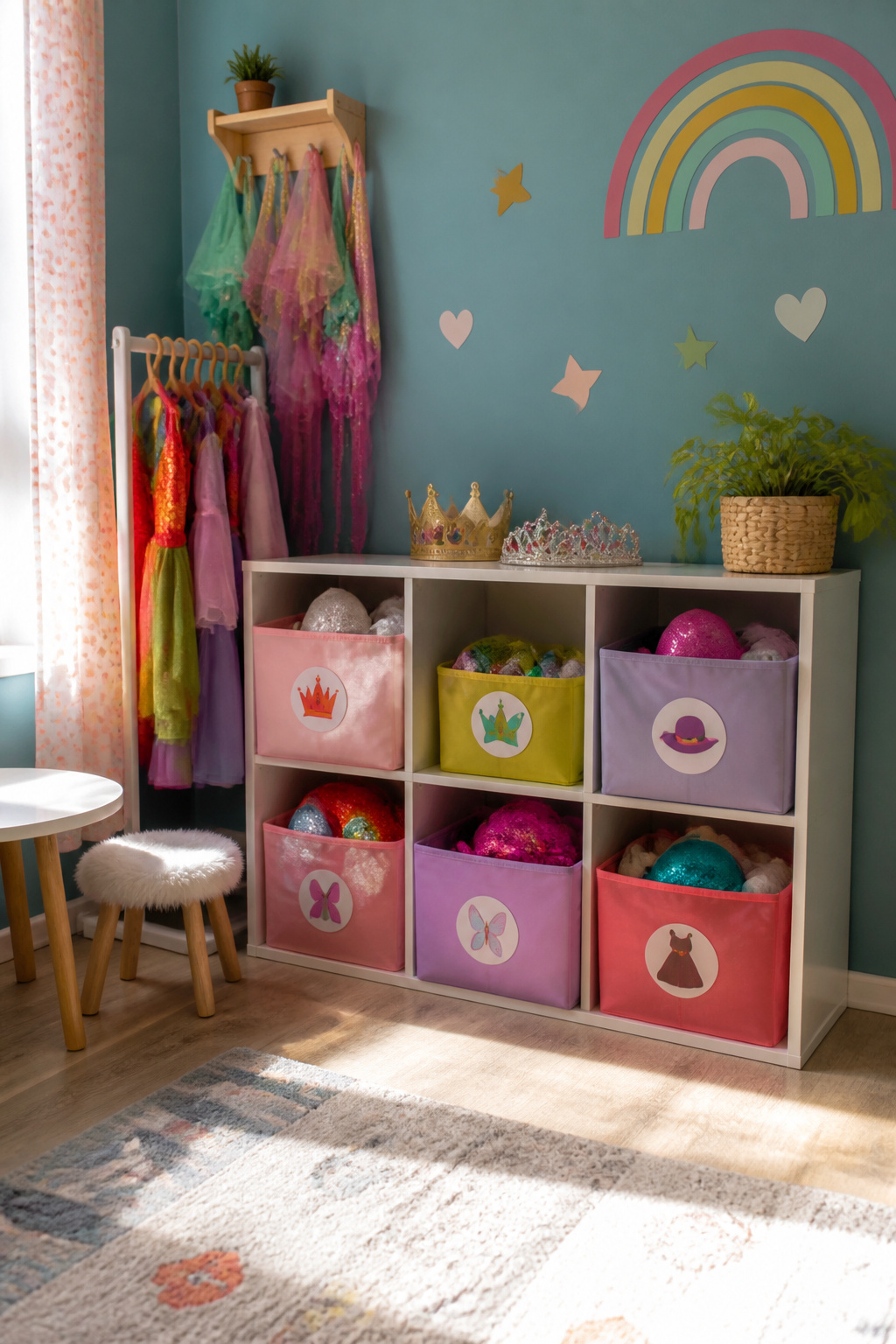
My daughter walked past the plain gray bin three times before I realized the problem. It held her favorite butterfly wings, but it looked like laundry, not like play.
Color changes everything. A wall of solid color behind the rack, even just a strip of wallpaper, turns a closet corner into something that reads as hers. The sources note that vinyl phrases or dot decals on that wall push it further from storage and closer to an extension of her room. I have seen the same shift with colored baskets instead of clear ones. Opaque baskets hide the mess, which I love, but the tradeoff is real: what kids cannot see, they do not play with. The fix is kid-friendly labels with pictures, not words. My Cricut Joy and writable vinyl handle this in ten minutes, and the return is immediate. She puts things back because the spot looks like it belongs to a game, not a chore.
Wood hangers cost more than plastic, but they signal that the space is display, not just function. A mirror does the same work. Ours got an afternoon scalloped-border update, and dress-up time doubled. The items that sat untouched, the ones in the storage bin that looked like storage, moved to a stacking suitcase set with bright hardware. Now they rotate in and out, and the interest holds.
Frequently Asked Questions
What are some good storage ideas for kids’ dress up clothes?
A dress-up trunk or large bin works for bulky items, while a hanging rod keeps capes and gowns wrinkle-free. Wall hooks put capes and boas at eye level, and a DIY dress-up closet made from a bookshelf with the back removed costs about the price of a tension rod and an afternoon. A premade station with a rod and bins underneath handles both costumes and accessories in one footprint.
How can I organize dress up clothes?
Split clothing from accessories rather than grouping by character, which falls apart within a week. Hang full-body pieces on kid-sized velvet hangers or a low rod placed 36 inches from the floor, and corral hats, jewelry, and wands into separate labeled bins. Picture labels let pre-readers clean up independently, and the system sticks long enough to become habit.
What is the best way to store dress up accessories?
Shoe-size compartments beat open bins for gloves, sunglasses, and tiaras because the tighter fit means less gets lost. A cubby with shoe-size compartments is the single most useful piece for the small odds and ends. Clear boxes work for jewelry since the color invites play, and a belt hanger mounted on the wall holds a surprising pile of ties and boas in a footprint barely wider than a picture frame.