
DIY home ideas are room-by-room projects you can finish in an afternoon or a weekend without hiring out. The catch is the time block you pick before you start: a "quick" cabinet hardware swap at 4 p.m. on a Sunday can leave you eating off a folding table for three days if you didn’t account for drying time and the drill bit you assumed you had. The $100 figure that shows up in every headline stretches furthest when you pair LED shop lights at under $20 each with a cabinet paint refresh, but it won’t cover the Kraus faucet that builder forums keep recommending for kitchens.
Kitchen Projects
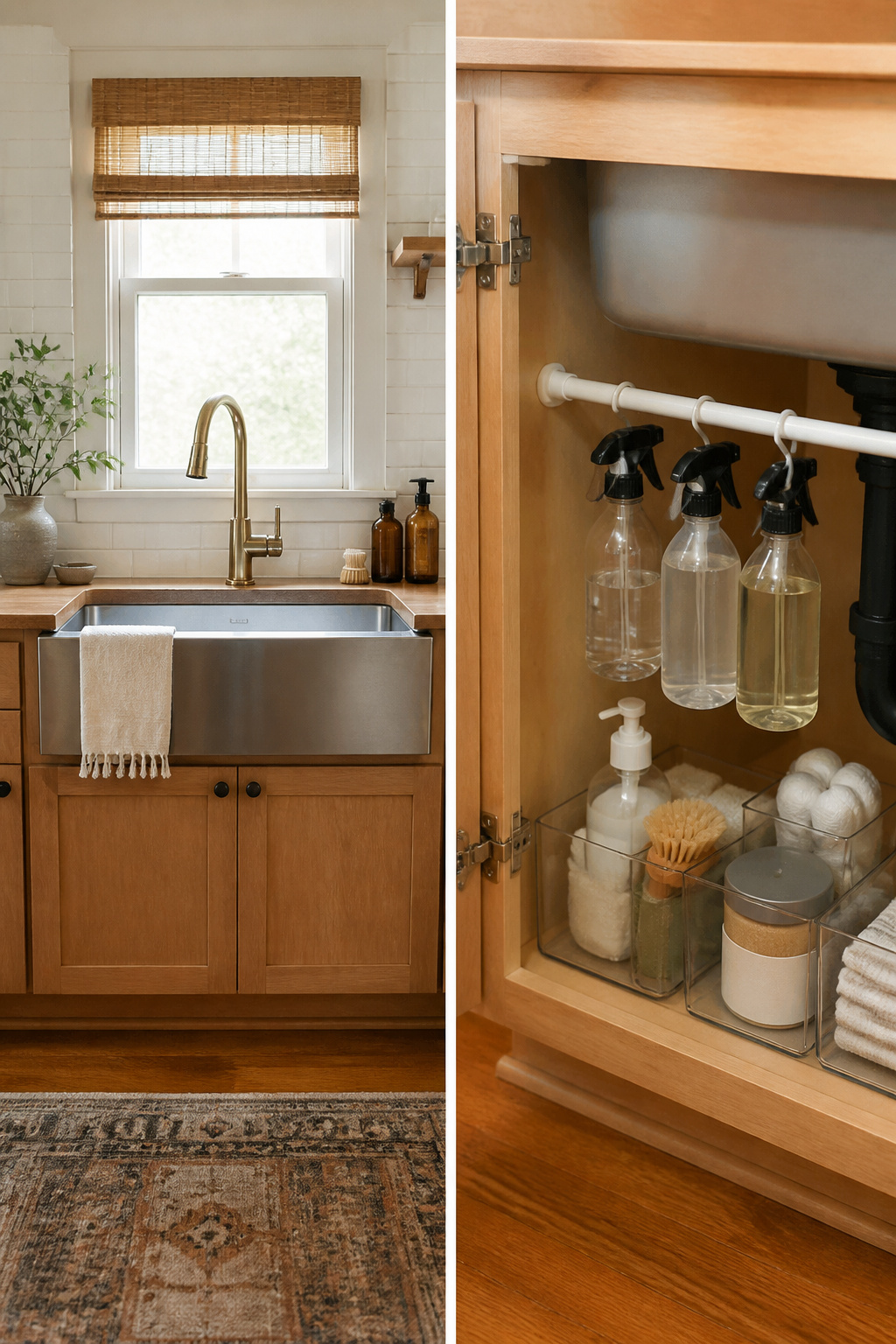
Kitchen projects hit the sweet spot for an afternoon and a $100 bill if you pick the right ones. The faucet swap is where most people start, and the Kraus Oletto High Arc in Antique Champagne Bronze is the one that keeps coming up: it reads custom without the custom price tag, and mixing that bronze against a stainless sink is not the mistake people fear it is. Under an hour with a basin wrench and some patience. Backsplashes follow the same logic; peel-and-stick subway tile or a small run of real tile with fresh grout changes how the whole wall reads. Painting cabinets is slower than the influencers suggest, sanding between coats and living with the smell, but it beats replacement on cost by miles. For countertops that have aged out, Rustoleum Appliance Epoxy is the workaround that works: sources who painted over granite itself report it holds up with minimal touch-up two years out. The under-sink zone is pure organization payoff, a tension rod for spray bottles and clear bins so you stop buying dish soap you already own.
Bathroom Projects
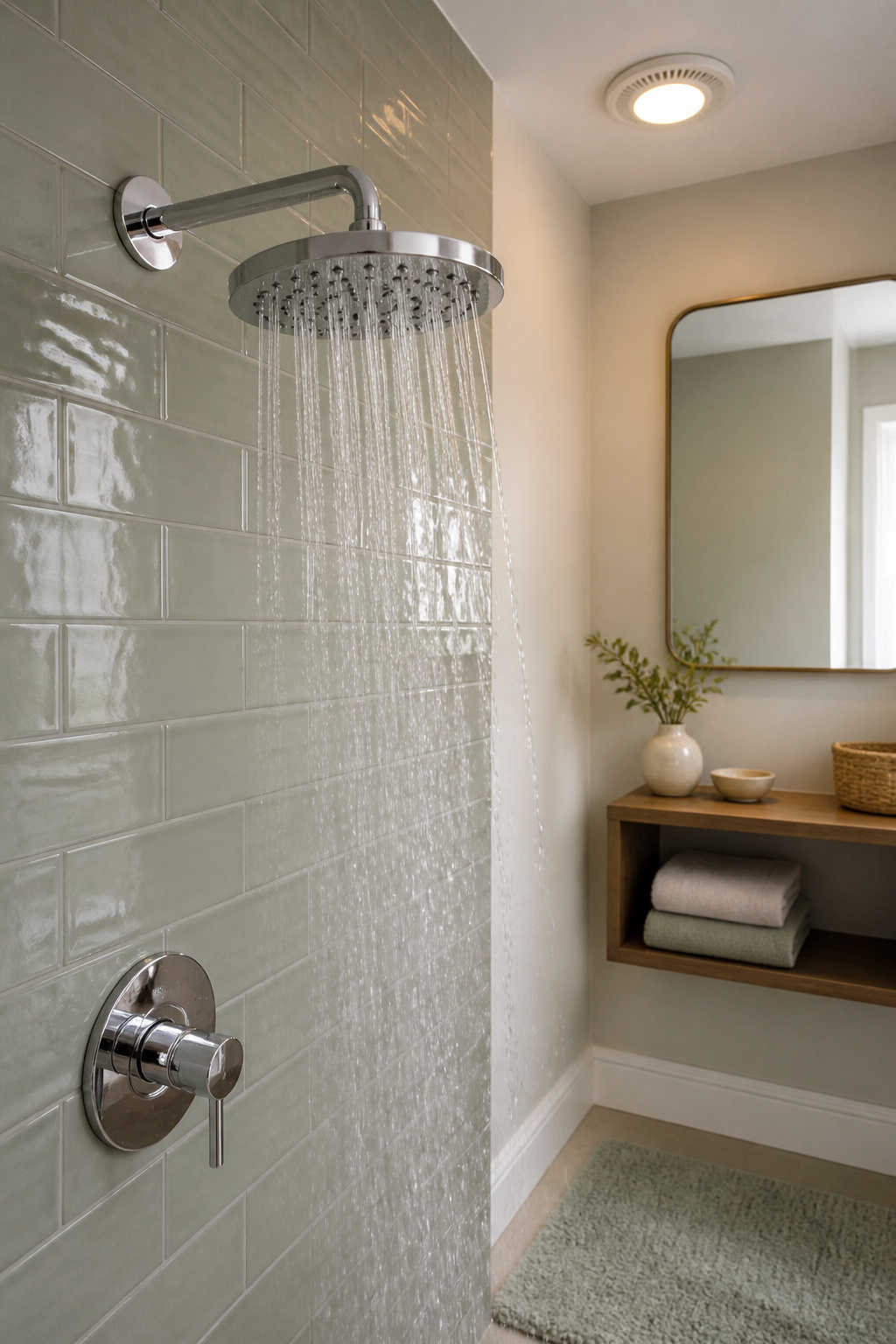
A showerhead swap takes ten minutes and a wrench, and the payoff is immediate water pressure without touching plumbing behind the wall. For renters, that matters: you take it with you when you leave.
Painted tile is riskier but doable. I’ve read enough accounts from people who did it three times across their homes to believe the adhesion holds if you prep right: degrease, scuff, prime with bonding primer, then two coats of epoxy paint meant for floors. The ones who skipped the scuffing saw chips within months. A small bathroom and a new mirror run about $100 together, and the paint does more visual work than the fixture swap.
The $25 humidity sensor switch for your bathroom fan wires in where the old wall switch sat, then runs the fan automatically when moisture hits its threshold. No more forgetting to flip it on, no more coming home to fogged mirrors and musty grout.
For vanity lighting, warm white 2700K bulbs flatters skin tones better than daylight temps. Pair them with a mirror install that uses French cleat hardware or keyhole brackets, not adhesive, so you patch two nail holes later instead of replacing drywall.
Temporary fixtures keep your deposit safe. Peel-and-stick LED vanity strips, over-the-door hooks, and tension-mounted curved rods all read as upgrades to the eye but not to a lease agreement.
Bedroom Projects
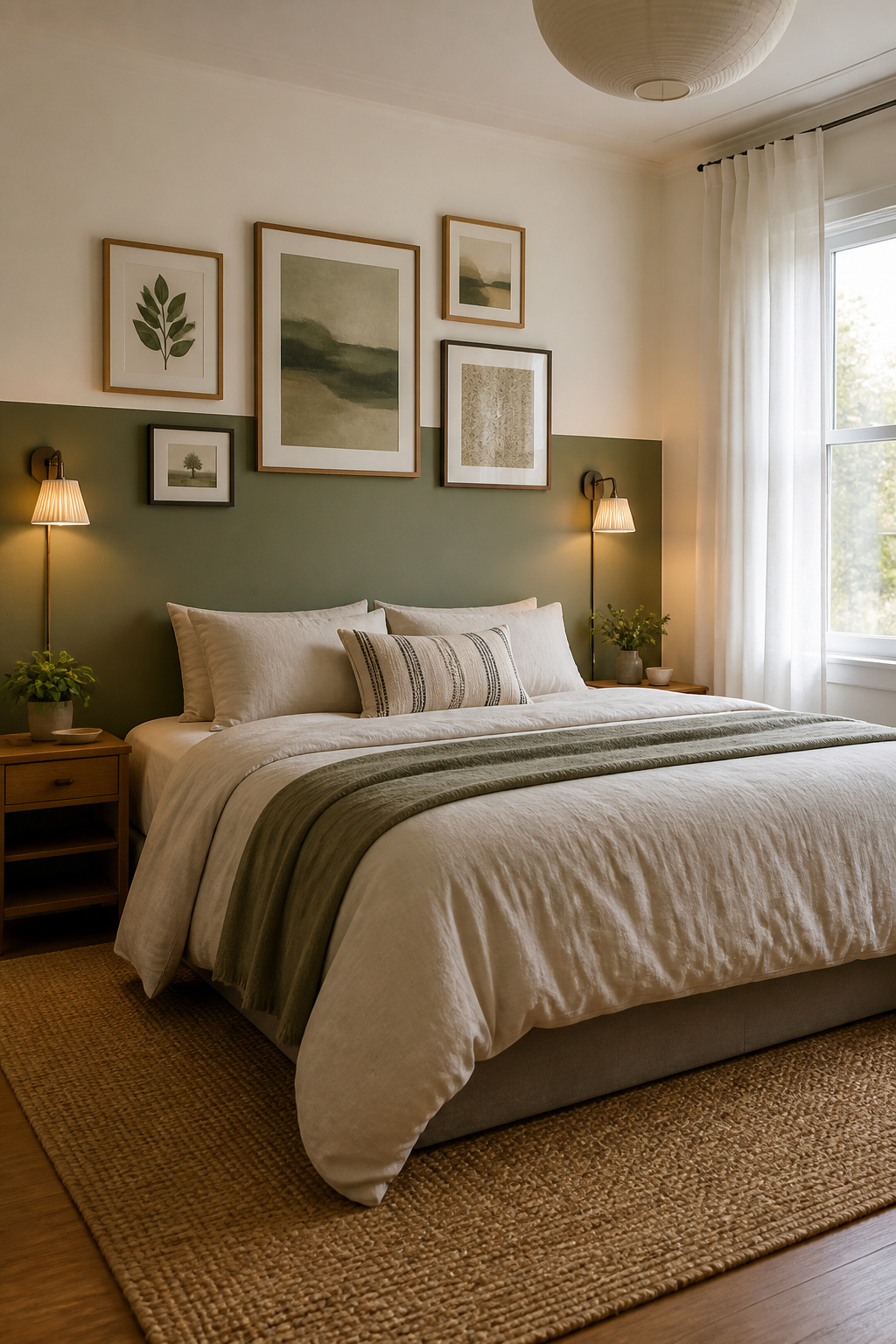
Bedroom projects that actually finish in one afternoon start with the walls. A painted headboard zone, running about a third of the way up from the floor, tricks the eye into reading higher ceilings in a smaller room. Designer Julie Rose used Farrow & Ball’s Breakfast Room Green above a creamy white, separated by a thin black line just ¼ inch thick. The effect is graphic and renter-friendly, since a weekend of patching beats explaining structural holes to a landlord.
For bedside light without the electrician, sconce mounting with cord-hiding channels keeps the wall clean. Command hooks tucked behind the bracket, or a paintable cord cover running down to the baseboard, let you skip hardwiring entirely. I have seen renters use the same trick with plug-in pendants and clip-on shades.
A gallery wall finishes the shift in feel without moving furniture. Dollar Tree 8×10 frames work for tight budgets; IKEA frames step up slightly if you want matting options. Asymmetrical or symmetrical, the layout matters less than keeping the spacing consistent while you hang.
Living Room Projects

The living room already holds everything needed for a reset. Move the sofa off the wall and float it toward the center, leaving 30–36 inches of walk space behind; the room gains a conversation zone that reads as intentional rather than leftover.
An area rug belongs under the front legs of the seating, not floating in the middle like a postage stamp. If the rug stops short of the furniture, the grouping looks marooned. A common rule of thumb runs 8 by 10 feet for a standard three-seat sofa and pair of chairs, though the tape measure matters more than the tag.
Floating shelves eat up zero floor space, which is the point. Mount them with the center of each shelf hitting roughly eye level, about 57–60 inches from the floor, and keep 12–15 inches of vertical breathing room between tiers so the wall does not feel like a ladder. A stud finder is non-negotiable here; drywall anchors rated for the load exist, but a shelf that sags three months in teaches a lesson no one wants. I learned that one watching a row of framed photos slide to a forty-five-degree tilt after I trusted where the wall sounded hollow.
Outdoor Projects
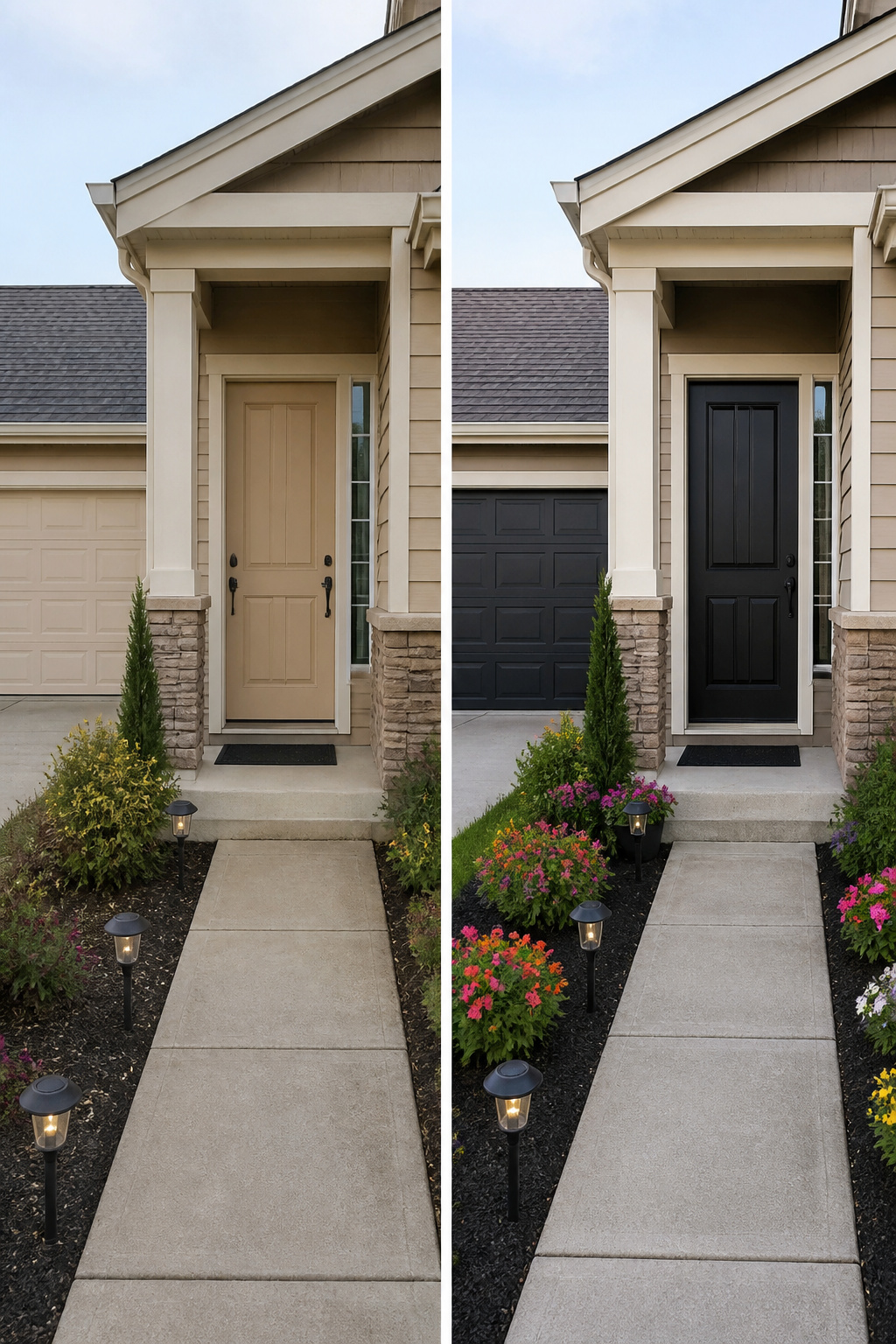
A front door in Tricorn Black reads as expensive from the curb, and the job takes one can of paint if the surface is already sealed. I painted ours on a Saturday in late April, which is the window you want: exterior latex needs temperatures above 50°F and low humidity for the surface to cure evenly. The garage door in the same shade ties the whole facade together for the cost of a second can.
LED shop lights work harder than most people expect for covered porches or garage overhangs. The motion-sensor strips that plug into an outlet, no hardwiring, are the quick win here: thirty minutes with a ladder and the evening arrival home feels different.
Garden beds built from whatever lumber is on sale that week earn their keep fastest along the foundation line or flanking the steps. Black mulch against Tricorn Black trim photographs like intentional design, which matters if you are the type who saves before-and-afters.
Solar pathway lights, a new doormat, and house numbers swapped for modern hardware finish the afternoon. The wreath is optional; the symmetry of matching pots by the door is not.
Quick Improvements
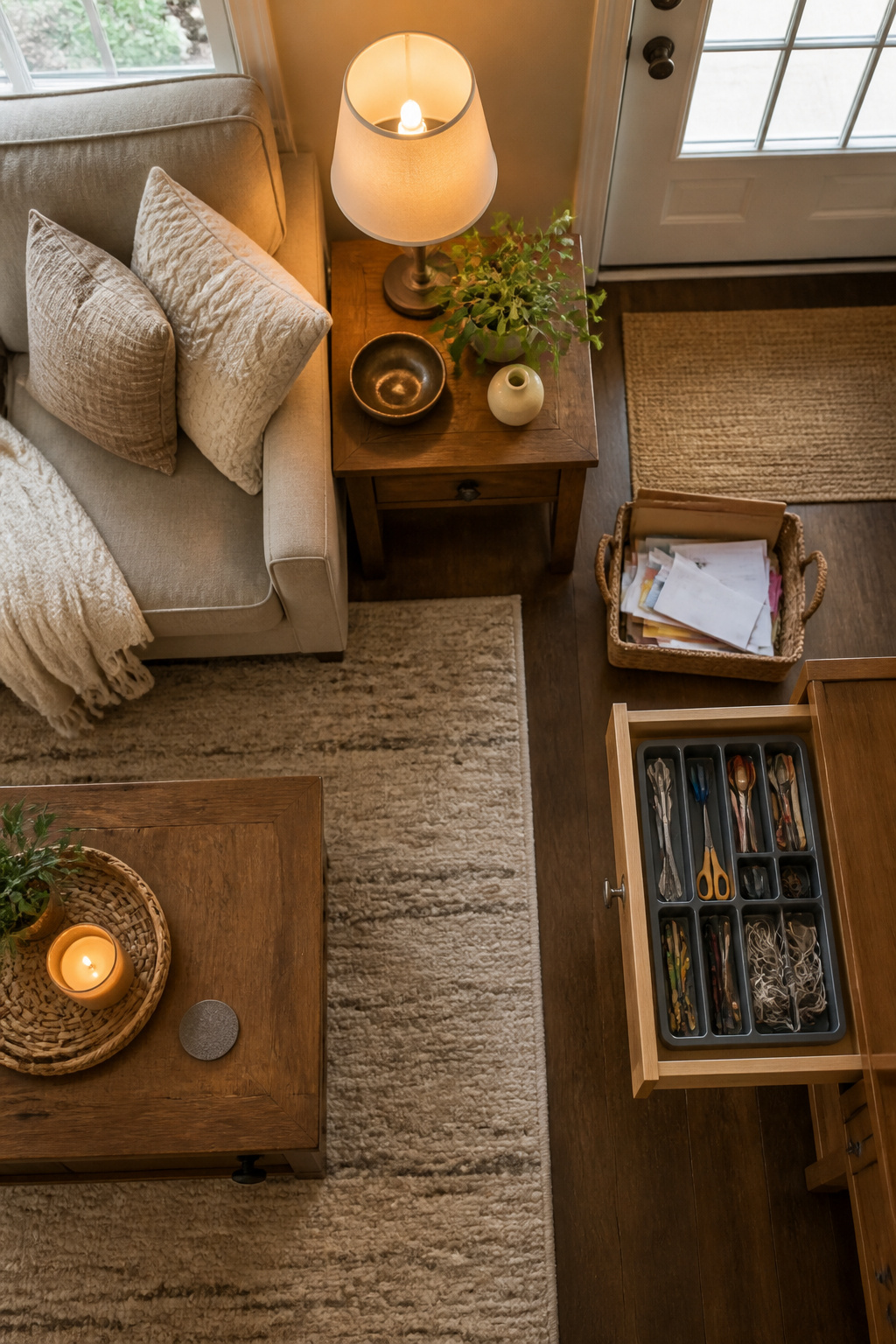
The fastest change I ever made that actually mattered was swapping every bulb in the house to 2700K warm white. The cool daylight bulbs that came with the place made 6 p.m. feel like a hospital corridor. Warm white does the opposite; it flatters skin tones and makes a room read as finished even when the couch is still from college. The swap itself takes maybe twenty minutes if you keep a step stool in the closet.
Decluttering systems are the other under-an-hour win, and the mistake is trying to organize everything at once. One drawer, one shelf, one drop zone. I reset the junk drawer with a silverware tray I already owned and called it done. The high-traffic spots, entryways and kitchen counters, respond fastest because you see them every time you walk through. Corral the mail pile, set a timer for thirty minutes, and stop when it rings. The sources all agree on this: half an hour of actual doing beats a weekend of planning.
Motion-sensor night-lights belong in this category too, especially the plug-in LED strips for under cabinets. No hardwiring, just an outlet and maybe a zip tie for the cord. They turn on when your hands are full and off when you’ve moved on. That is the pattern for quick improvements: the project should solve a problem you have every day, and it should be finished before you start second-guessing it.
What $100 Buys
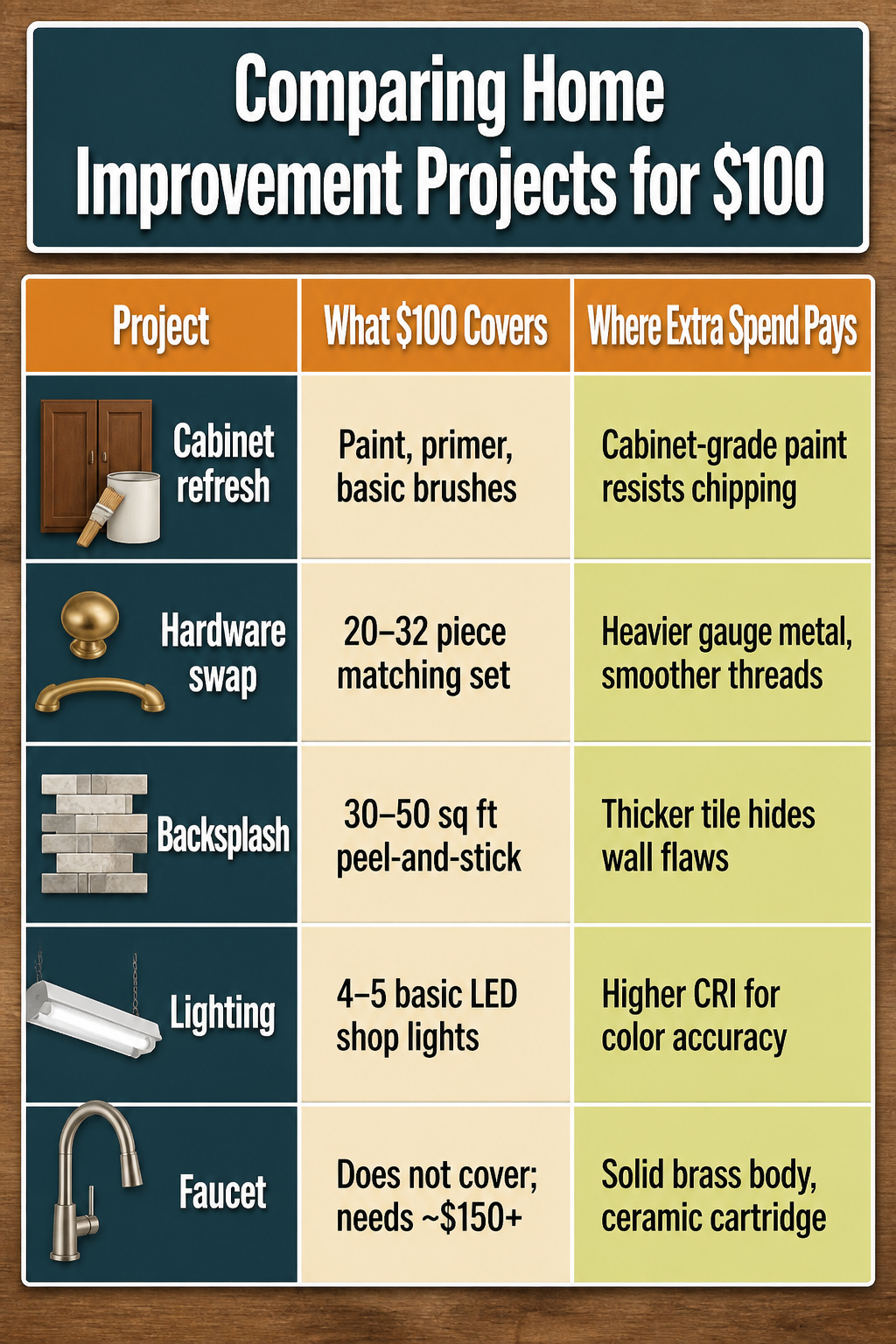
A hundred dollars does not stretch evenly across rooms. Paint and primer for a cabinet refresh runs about half that budget once brushes, rollers, and sandpaper are in the cart. Hardware packs for kitchen and bath, the thirty-two-piece sets with matching pulls and knobs, sit in the twenty-five to thirty dollar range. Peel-and-stick backsplash tile lands around a dollar per square foot, so a standard backsplash behind one stove eats the rest.
The Kraus faucet I keep seeing in builder forums sits above this bracket. Their entry model runs closer to one-fifty, and the pull-down versions push past two hundred. Spending that extra fifty buys a cartridge that actually lasts, plus a finish that does not spot with hard water. Your call whether that pays back in daily use or just in avoiding a replacement two years out.
LED shop lights for the garage or a dark laundry corner start under twenty dollars each. Two of them, plus the cabinet paint, gets you three projects from the same hundred.
| Project | What $100 Covers | Where Extra Spend Pays |
|---|---|---|
| Cabinet refresh | Paint, primer, basic brushes | Cabinet-grade paint resists chipping |
| Hardware swap | 20–32 piece matching set | Heavier gauge metal, smoother threads |
| Backsplash | 30–50 sq ft peel-and-stick | Thicker tile hides wall flaws |
| Lighting | 4–5 basic LED shop lights | Higher CRI for color accuracy |
| Faucet | Does not cover; needs ~$150+ | Solid brass body, ceramic cartridge |
Renting Without Regret
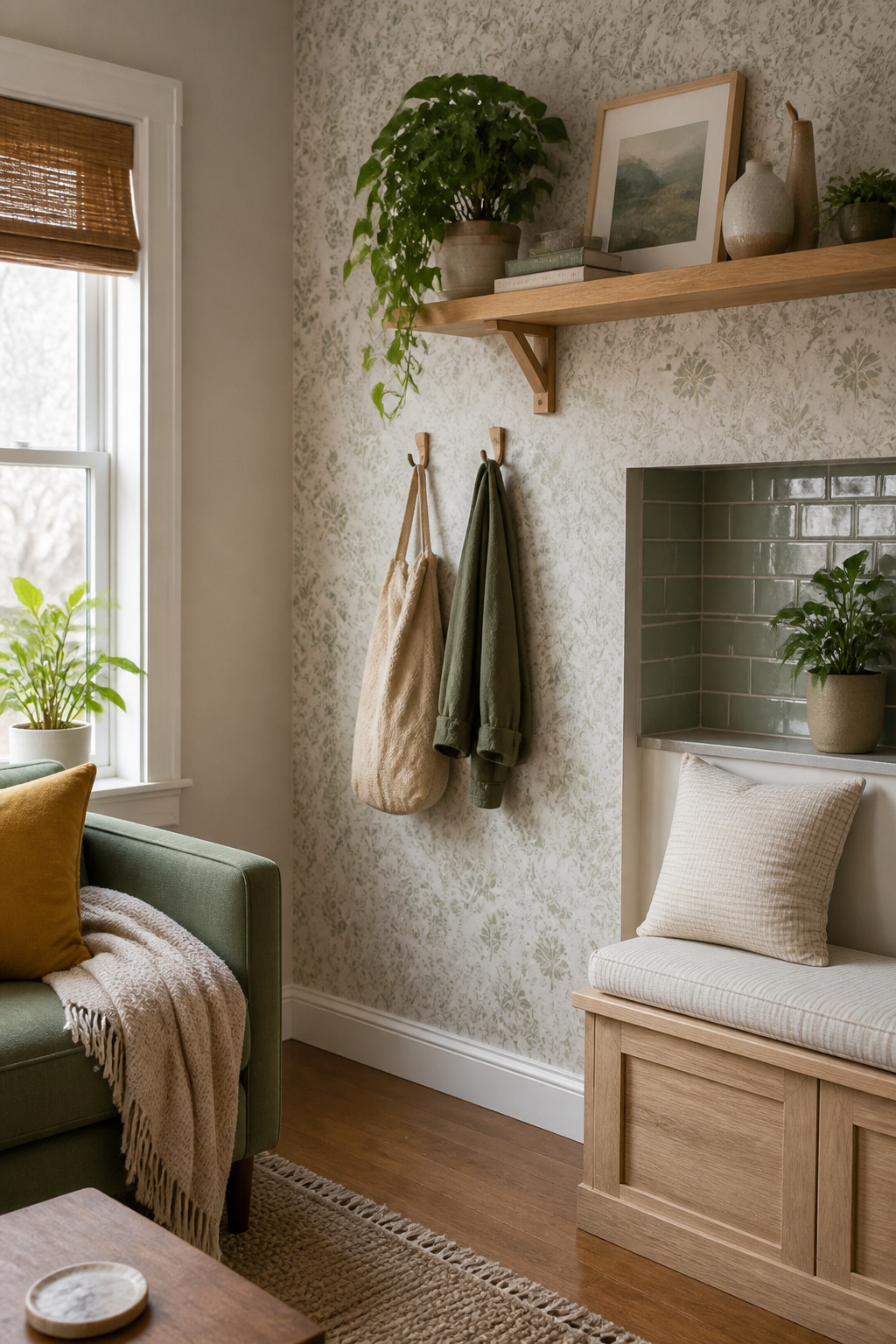
Removable wallpaper looks like the real thing until you peel a corner back. Most versions come off in one sheet if the wall was prepped with a quick wipe of warm water first, but cheap paper left up for more than a year can take flecks of latex paint with it. The residue risk sits almost entirely in the adhesive quality, not the paper itself.
Temporary hooks rated for real weight usually mean fifteen to twenty pounds on a hook that pops off with a tug on the release tab. The catch is that tab needs to stay accessible, so mounting a shelf that overhangs the strip turns "removable" into "pry it off with a putty knife and hope." Leave the tab exposed or the hook becomes permanent by default.
Peel-and-stick tile backsplashes work best on smooth existing tile or a primed drywall patch, never directly over bare joint compound. The bond relies on surface tension more than glue strength, so a single greasy spot behind the stove means a corner curling up in six months. Removal means heat from a hair dryer and slow pulling; rip it fast and the foam backing separates from the vinyl face, leaving two problems instead of one.
What "temporary" actually means in practice is a window, usually two to three years, before the adhesive starts thinking of itself as permanent. The products save deposits when you treat them like short-term guests, not furniture.
Hour Marks and Weekend Marks
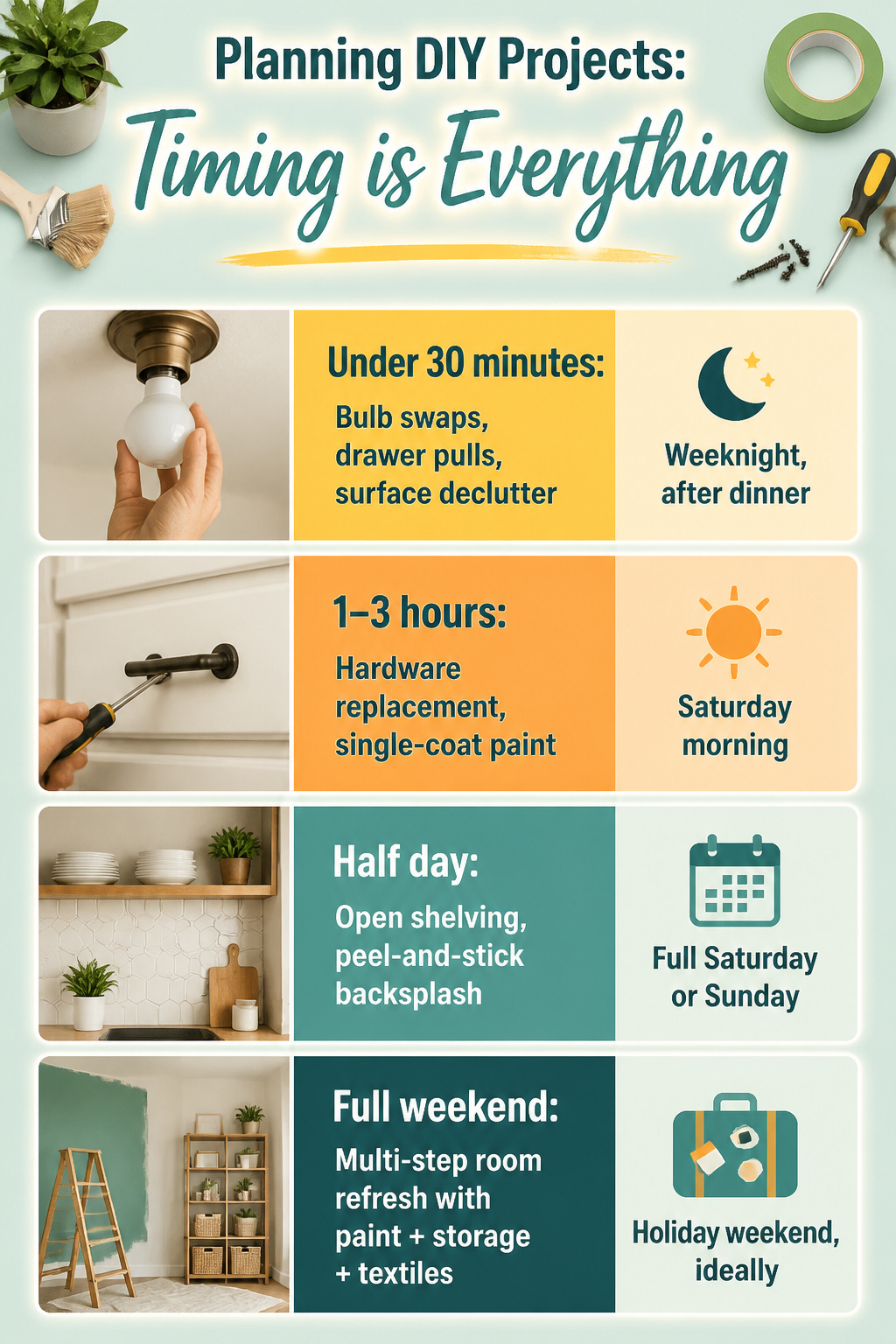
The biggest mistake in picking a diy home idea is matching the project to the mood instead of the clock. Swapping a cabinet knob or running a declutter sprint fits a lunch break; painting a single wall needs the full afternoon cleared; and that Pinterest board full of built-in shelving or tiled backsplashes assumes a Saturday you actually have.
| Time Block | What Actually Fits | When to Schedule It |
|---|---|---|
| Under 30 minutes | Bulb swaps, drawer pulls, surface declutter | Weeknight, after dinner |
| 1–3 hours | Hardware replacement, single-coat paint | Saturday morning |
| Half day | Open shelving, peel-and-stick backsplash | Full Saturday or Sunday |
| Full weekend | Multi-step room refresh with paint + storage + textiles | Holiday weekend, ideally |
Block the time before you buy the supplies. I have learned this by doing the opposite: starting a "quick" hardware swap at 4 p.m. on a Sunday and eating takeout off a folding table for three days. The project list in your head shrinks dramatically once you count drying time, tool retrieval, and the trip back to the store for the drill bit you assumed you had.
Frequently Asked Questions
What are some easy DIY home improvement projects?
Painting cabinets, swapping out hardware, installing peel-and-stick backsplashes, and adding floating shelves all deliver visible change without professional help or major demolition. The article covers faucet swaps that take under an hour, showerhead replacements in ten minutes, and under-sink tension rod organization that costs almost nothing. Most of these need only basic hand tools you probably already own.
How can I improve my home on a budget?
A hundred dollars goes furthest on paint and primer for cabinets, a 20–32 piece hardware set, and 30–50 square feet of peel-and-stick backsplash tile. The article also recommends Rustoleum Appliance Epoxy for aging countertops, LED shop lights under twenty dollars each for dark corners, and a whole-house bulb swap to 2700K warm white for twenty minutes of effort. These projects beat replacement costs by miles while still reading as intentional design.
What DIY projects can I do in under an hour?
Bulb swaps to warm white, drawer pull replacements, decluttering one shelf or drawer, showerhead swaps, and installing motion-sensor night-lights all fit inside sixty minutes. The article also lists swapping outlet covers, running a cord cover, and restyling a single surface like an entry table or coffee corner. Set a timer for thirty minutes and stop when it rings; half an hour of actual doing beats a weekend of planning.