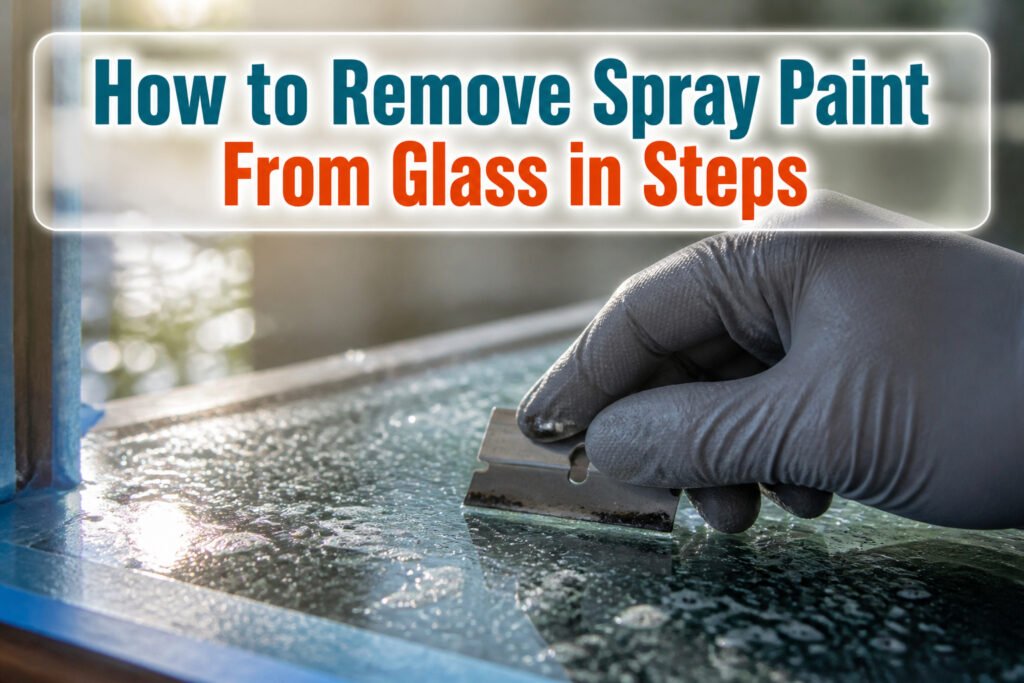
Six steps get spray paint off glass in an afternoon, but the real cost is the prep most people skip. Without gloves, a mask, goggles, and taped-off frames, you trade ten minutes of setup for headaches, stained wood, or an ER trip.
The stage where projects fail is scraping. A razor blade will scratch the glass unless you keep it perfectly flat and use clay spray for lubrication. The blade cannot tell sand from paint, so skipping the initial wash with warm soapy water traps grit underneath and drags it across the surface.
1. Prepare the Area

Gloves, a mask, and goggles sit on the workbench before anything else gets touched. Paint removers carry chemicals that do not stay where you put them, and the first time I skipped the mask I learned that the hard way: two hours of headaches and a window left cracked open until dark. The goggles matter just as much; one splash of stripper in the eye turns an afternoon project into an ER trip.
Cover the floor with drop cloths or plastic sheeting, and tape off any frame, sill, or wall that borders the glass. Overspray from the remover itself will stain wood and etch plastic, so the five minutes of prep pays back tenfold. Valuables move to another room, not just to the corner. I have brushed against a "safe" chair and left a white smear that outlasted the original project.
Ventilation is non-negotiable. A fan in the window, exhaust running, anything that keeps air moving. The well-meaning skip here is working in a closed bathroom because the glass is small; the stripper fumes pool, and the job takes twice as long because you keep stepping out to breathe.
2. Clean the Glass First
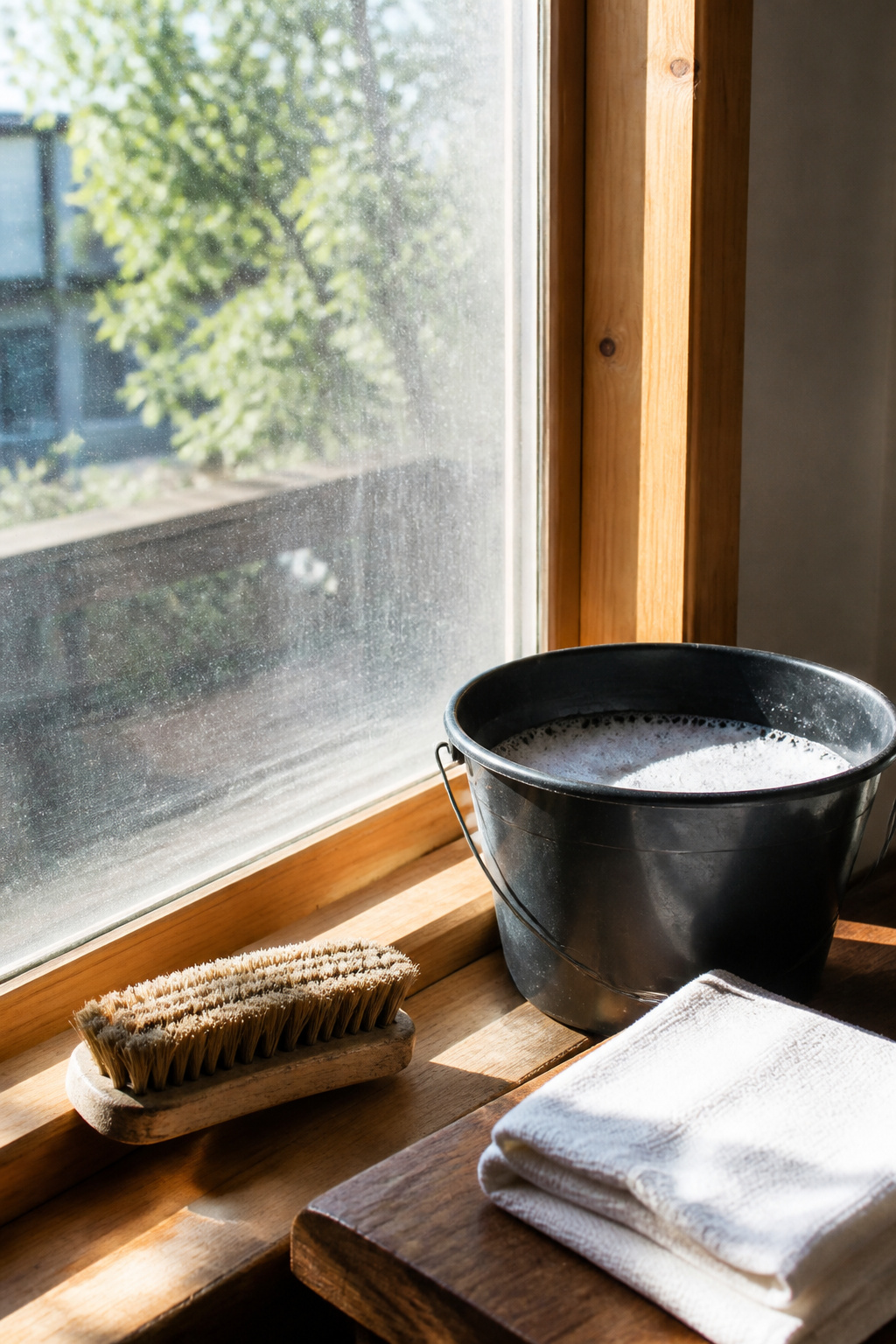
Warm soapy water and a scrub brush come first, before any paint remover touches the glass. Two separate guides treat this as its own preparatory step, not an afterthought, and the reason is simple enough that skipping it once will stick with you. Dirt and grit left on the surface get trapped under the blade or scraper and drag across the glass, scoring it with scratches that the paint removal was supposed to prevent. The blade cannot tell the difference between a grain of sand and a fleck of paint, so both get pushed into the surface if the glass is not clean. A quick wash with warm water and dish soap, worked in with a scrub brush, lifts off road dust, pollen, and whatever else settled there since the overspray happened. Rinse, dry with a cloth that will not leave lint behind, and then the glass is ready for the actual work.
3. Apply the Remover

Three removers sit on the counter, and each has its place. A commercial paint stripper works fastest on thick layers, though the label’s ventilation warning is not a suggestion to skip. I read the manufacturer directions twice, suited up with gloves, and gave the first coat ten minutes to soften before touching it again.
White vinegar is slower but easier to find in the pantry. The acetic acid breaks paint down rather than dissolving it outright, so the wait stretches longer. I used standard 5% strength from the grocery store, poured it straight onto a cloth, and let it sit on a test patch for about fifteen minutes before the color started lifting.
Rubbing alcohol handles spray paint specifically, which is why it earned a spot in this lineup. The 70% bottle in my medicine cabinet did the job on fresh overspray with less waiting than vinegar and less caution than the chemical stripper. For small spots, it is usually the first thing I reach for.
4. Scrape the Paint
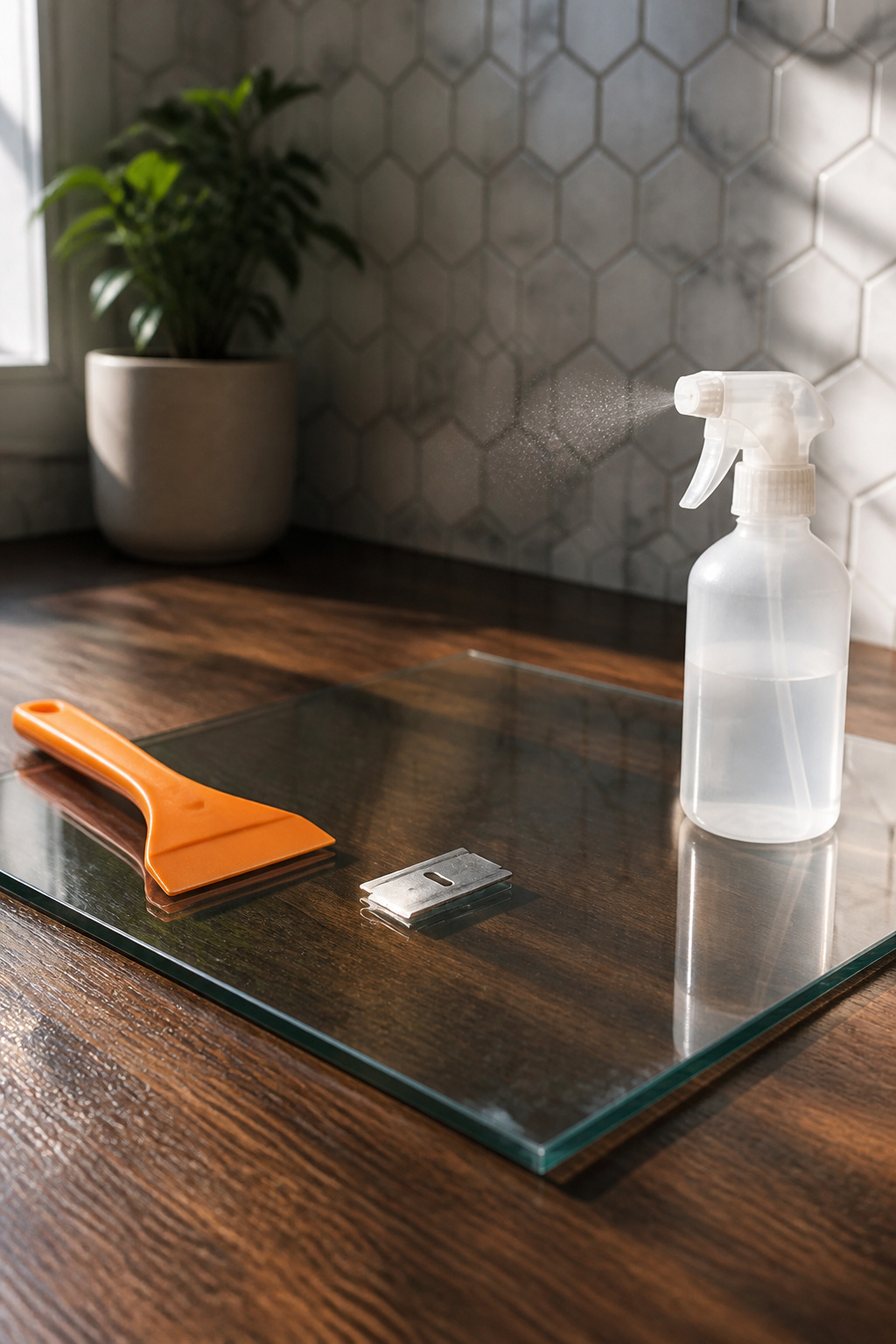
A new sharp single-edge razor blade or a plastic scraper gives you the control this step needs. Keep the blade flat against the glass and scrape away from your body; angling the edge or working toward yourself is how cuts and scratches happen.
Razor blades can scratch glass, but the risk comes from poor technique, not the tool itself. The blade stays safe when it rides flat on the surface with lubrication between it and the glass. Clay spray works as that lubricant: it lets the blade glide instead of skip or catch. Without it, or with the blade tilted on its corner, you are scraping dry, and that is where the damage starts. A plastic scraper removes the cut risk entirely, though it may need more passes on thick paint.
Steel wool is another option for paint, but only fine or superfine grade, and it has no place on any painted trim nearby. The razor blade stays the cleaner choice for glass alone.
5. Wipe and Inspect

A wet rag picks up the film that solvent leaves behind better than a dry one. Run it in one direction, flip the cloth, and run it back. The glass looks clean until the light hits it a certain way and a faint ghost of pigment shows up at the edge where the frame meets the pane. That border is where impatience cost me the first time; I wiped the center, called it done, and found a pale rim the next morning when the sun came through. A second pass with fresh solvent on a cotton pad takes thirty seconds if you catch it now, and ten minutes if the residue has dried overnight. Tilt the glass against a light source and inspect at an angle, not straight on. The spots you miss are almost always at the perimeter or in a corner where the scraper couldn’t sit flat.
6. Final Polish

A clean pane of glass after all that scraping feels like something earned. The last step is the one that actually makes it feel finished. A good glass cleaner, the kind with ammonia, cuts through whatever residue the solvent left behind. I keep a bottle of Sprayway around because the foam stays where you put it instead of running down the glass before you wipe. One pass with a microfiber cloth, then a second pass buffing with the dry side, and the surface goes from "clean enough" to the kind of clear you forget is there. That streak-free finish is the reward for not rushing the earlier steps. Skip it and you will still see ghosts of the work every time the light hits at an angle.
Household Solutions That Work

Vinegar sits in almost every kitchen, and for glass it earns its keep. White vinegar breaks down paint enough to wipe away without the fumes of stronger solvents. I mix it hot, let it sit on the spot, then scrub with a non-abrasive pad. It is safe on non-tinted glass and costs next to nothing, though patience matters more than with commercial removers.
Rubbing alcohol handles fresher overspray well. The 70% solution most people already own lifts paint that has not fully cured, and it evaporates clean. On fully dried paint, it softens the surface for scraping but rarely dissolves the whole layer alone.
A vinegar-water solution can be used on most glass surfaces. After applying, scrub with a non-abrasive pad to scrub the spray paint away.
— Trimaco
That "most glass surfaces" line matters. Vinegar is not the right call for tinted windows; the acidity can damage the tint film over time. For standard clear glass, though, it is the first thing I reach for. Acetone-based nail polish remover works faster on stubborn spots, but only on non-tinted glass, and any residue left sitting will etch the surface eventually. Ventilation and gloves are non-negotiable with acetone.
Scraping Without Damage

A razor blade gets under spray paint on glass better than anything else, but only if you keep it flat and use plenty of lubrication. Clay spray works here: mist the surface so the blade glides instead of catching. Hold the blade at a shallow angle and move with the edge, not against it. The consensus says proper technique prevents scratches, and most guides treat a razor as standard equipment for glass.
Still, two common warnings push back. Some experienced hands advise skipping metal altogether and reaching for a plastic scraper instead. The edge is duller, so it needs more passes and more patience, but the scratch risk drops to nearly zero. Plastic also forces you to rely on your solvent doing the softening work rather than scraping harder.
Your call comes down to what you are willing to risk on that particular pane. A lubricated razor blade, kept flat, is the faster path for a basic afternoon cleanup. Plastic trades speed for safety, and on antique glass or a window you cannot replace, that trade might be the right one.
When to Call Someone
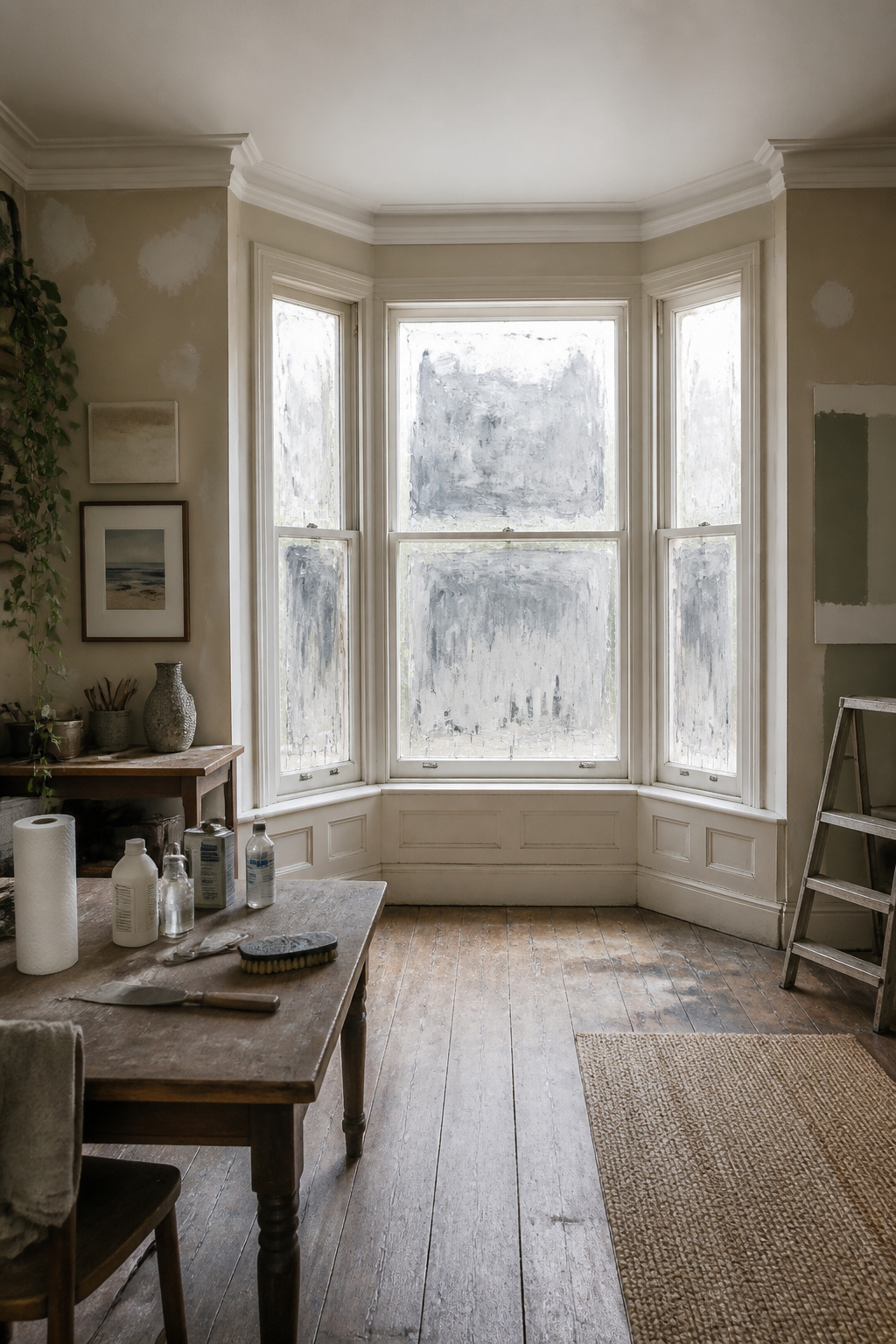
A single pane with a few speckles of overspray is one thing. A whole bay window coated in layers of paint, or glass where the paint has cured for months, is where the math changes. Extensive paint buildup risks scratching the glass once you start scraping without the right tools or technique. Professional window cleaners carry specialized scrapers and solvents that lift stubborn paint without the trial and error that leaves marks. I would try the six-step method on anything smaller than a dinner plate, or on paint I caught within a day or two. Anything larger, older, or on glass I cannot afford to replace gets handed off. The same goes for second-story work or any spot where I would need to lean a ladder at an angle that feels wrong in my gut. Saving an afternoon is not worth etching a window.
What the Job Needs

A razor blade works on glass because the surface is hard enough to let the edge slip underneath paint without digging in. The catch is keeping the blade flat. Tilt it even slightly and you score the pane. Sources disagree on whether to skip the blade entirely. Plastic scrapers are the safer call for etched glass, where any blade risks catching the pattern. For smooth glass, the blade is faster if you pair it with a lubricant.
Clay spray is the one I would not skip. It keeps the blade gliding instead of dragging dry across the surface. Vinegar or rubbing alcohol can soften fresh paint without the fumes of a commercial stripper, though a stripper is the backup for paint that has cured hard.
Here is the full list:
- Nitrile gloves, respirator mask, safety goggles, and coveralls or old clothes you do not mind trashing
- Straight razor blade or plastic scraper
- Vinegar, rubbing alcohol, or spray paint stripper
- Dish soap, warm water, and a scrub brush
- Glass cleaner and a non-abrasive pad
- Clay spray for lubrication
- Blue painter’s tape to mask the frame or nearby walls
Frequently Asked Questions
Can paint be removed from glass without scratching it?
Yes, if you soften the paint first and keep any blade flat against the surface with plenty of lubrication. A plastic scraper removes the cut risk entirely, though it needs more passes on thick paint. The real damage comes from poor technique, not the tool: a tilted blade or dry scraping drags grit across the glass.
Is vinegar good for removing paint from glass?
White vinegar breaks down paint safely on non-tinted glass, though it works slower than commercial removers. Heat it, let it sit on the spot for about fifteen minutes, then scrub with a non-abrasive pad. Do not use vinegar on tinted windows; the acidity can damage the tint film over time.
Should I scrape paint off windows with a razor?
A razor blade is the faster path if you keep it flat and use clay spray as lubrication, but angling the edge or scraping dry is how scratches happen. Some experienced hands prefer plastic scrapers instead; the trade is speed for near-zero scratch risk, which matters on antique glass or irreplaceable panes.